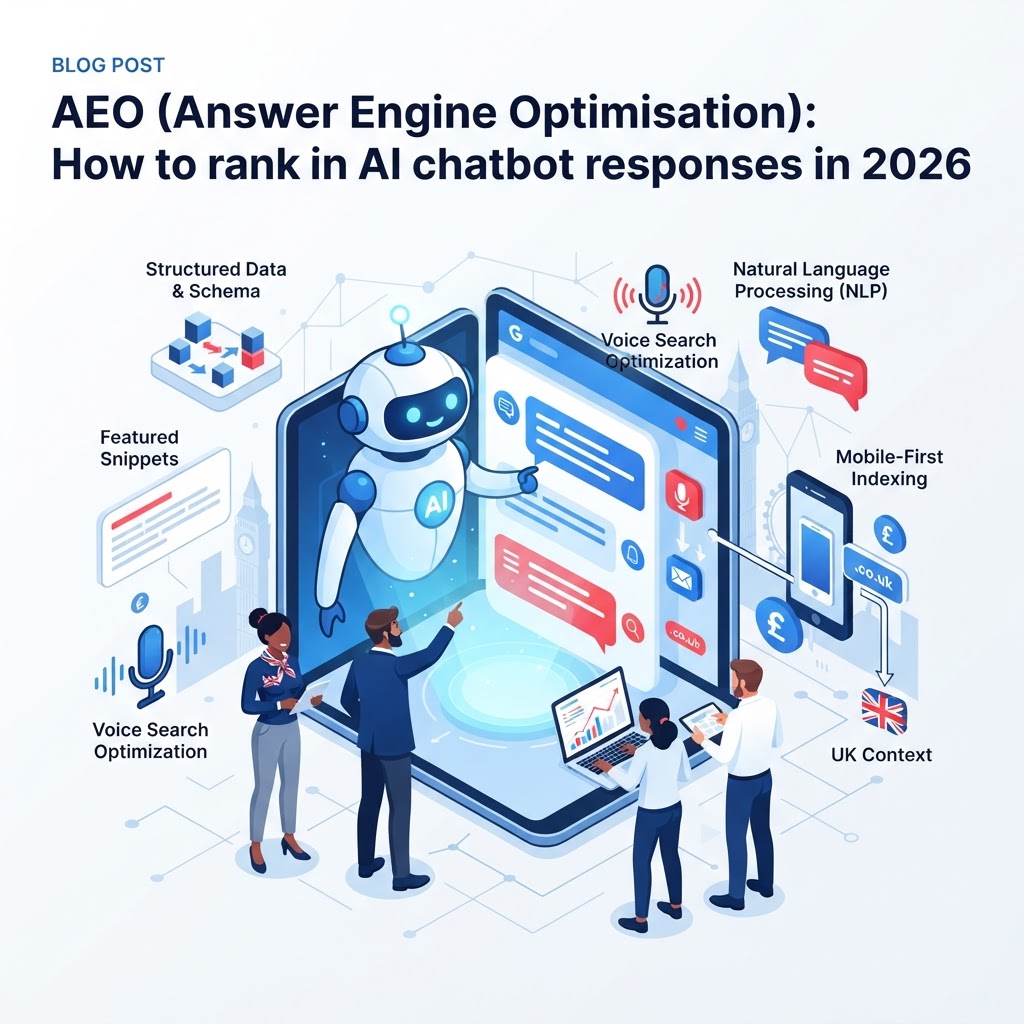
Artificial intelligence is fundamentally changing how people find information online. In 2026, a growing number of searches never reach a traditional search results page at all — they're answered directly by AI chatbots like ChatGPT, Google Gemini, Microsoft Copilot, and Perplexity. For UK businesses, this shift creates both a challenge and an opportunity. Answer Engine Optimisation (AEO) is the discipline of structuring your content so that AI systems select, cite, and recommend it when answering user queries. At STEPS Solutions in Halifax, West Yorkshire, we're helping businesses across Yorkshire and beyond adapt their digital strategies to this new reality. This guide explains exactly what AEO is, why it matters in 2026, and how to implement it effectively.
What Is AEO (Answer Engine Optimisation)?
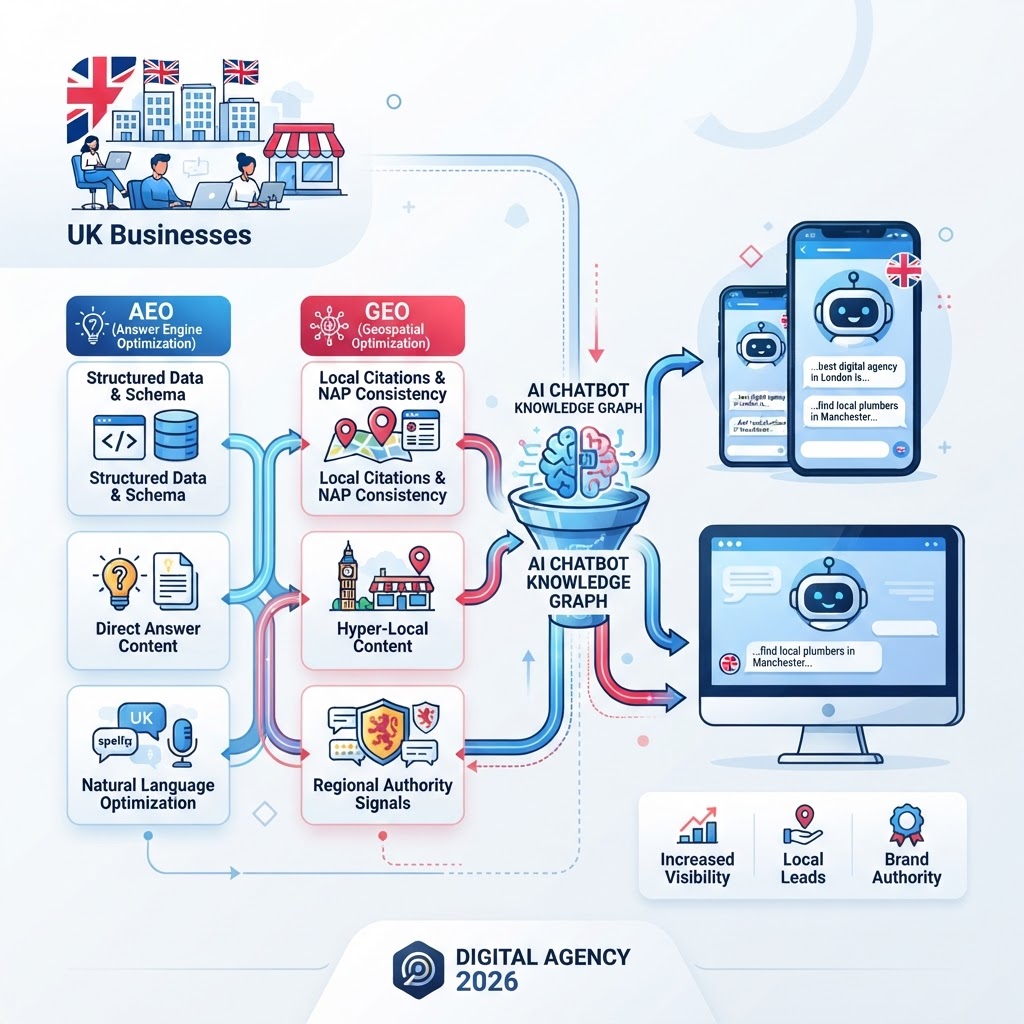
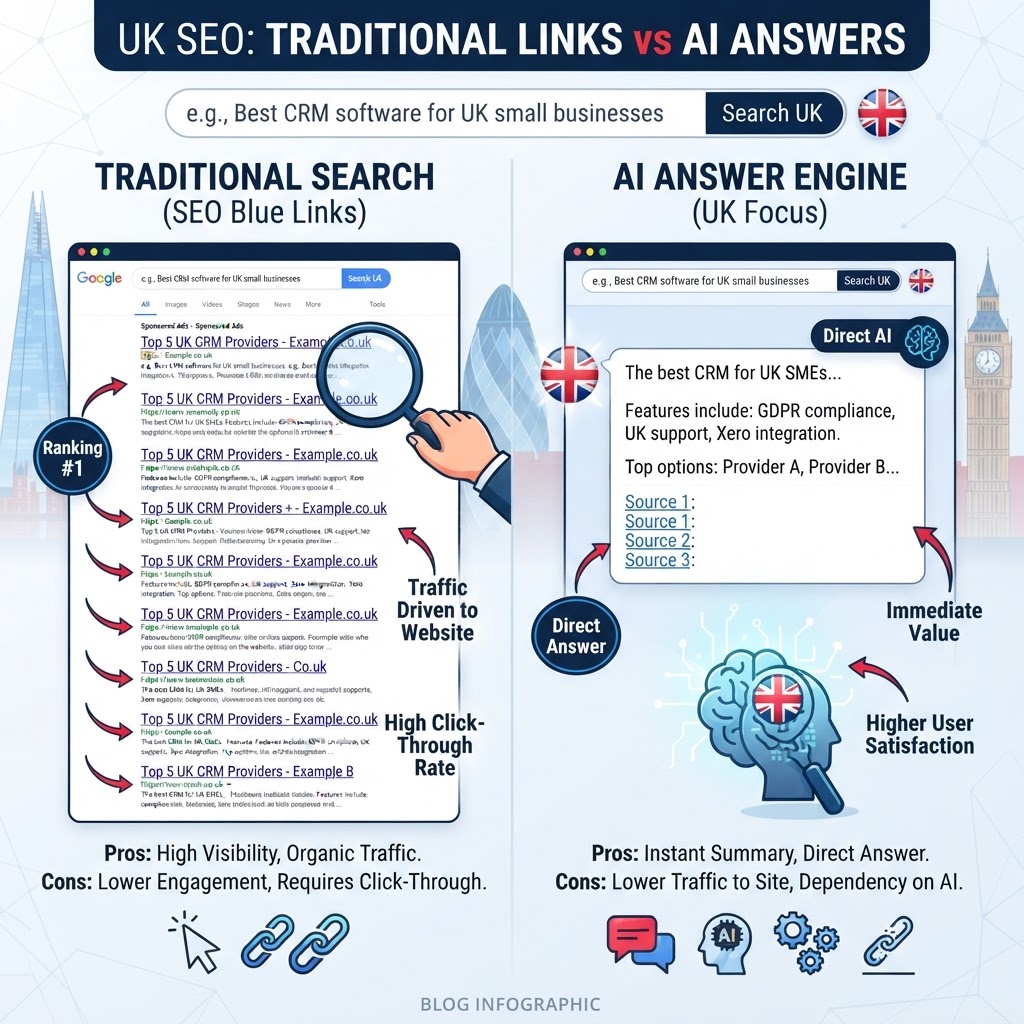
Answer Engine Optimisation (AEO) is the process of optimising digital content so that AI-powered answer engines — including large language models (LLMs), voice assistants, and AI chatbots — retrieve, trust, and surface that content in direct responses to user queries. Unlike traditional SEO, which focuses on ranking in a list of blue links, AEO is about becoming the source an AI cites when it generates an answer.
AEO is closely related to two emerging disciplines:
- GEO (Generative Engine Optimisation): Optimising content so generative AI systems incorporate it into their outputs.
- LLM Optimisation: Structuring content in a way that large language models can easily parse, understand, and reproduce accurately.
Together, these three approaches form a modern content strategy that goes beyond Google rankings and targets the AI layer of search.
Why AEO Matters for UK Businesses in 2026
The numbers speak clearly. AI-powered search and chat interfaces now handle a significant portion of informational queries. Users increasingly expect immediate, conversational answers rather than a list of links to browse. For businesses in Halifax, Yorkshire, and across the UK, this means traditional SEO alone is no longer sufficient to maintain visibility.
"By 2026, an estimated 40% of all search queries in mature markets will be handled by AI answer engines rather than traditional search result pages, representing a fundamental shift in how brands achieve digital visibility." — Gartner Digital Marketing Research, 2024
If your content isn't structured to answer questions clearly and authoritatively, an AI model will simply cite a competitor who does. For local businesses and SMEs working with agencies like STEPS Solutions, getting ahead of this shift now is a significant competitive advantage.
How AI Chatbots Select and Cite Content
To optimise for AI answer engines, you first need to understand how they work. LLMs like GPT-4 and Gemini are trained on vast datasets, but they also perform real-time retrieval — pulling from indexed web pages, knowledge bases, and structured data to supplement their responses. The content they favour shares specific characteristics.
What Makes AI Models Trust Your Content?
- Clarity and directness: Content that answers a question in the first sentence or two is far more likely to be cited than content that buries the answer in paragraphs of preamble.
- Factual accuracy and verifiability: AI systems favour content that includes specific data, dates, statistics, and named sources.
- Authoritative structure: Well-organised content using proper heading hierarchies (H1 → H2 → H3) signals expertise and helps AI parse the topic hierarchy.
- Schema markup: Structured data using Schema.org vocabulary (FAQ schema, HowTo schema, Article schema) makes content machine-readable and significantly improves AI discoverability.
- E-E-A-T signals: Google's framework of Experience, Expertise, Authoritativeness, and Trustworthiness applies directly to AEO — AI systems are trained to prefer sources that demonstrate these qualities.
- Brand mentions and citations: The more reputable sources mention your brand or link to your content, the more likely an AI is to treat you as an authoritative source.
Core AEO Strategies to Implement in 2026
1. Write in a Question-and-Answer Format
The single most effective AEO tactic is to frame your content around the exact questions your target audience is asking. Use the question as a heading, then provide a direct, concise answer in the opening sentence of the following paragraph. This mirrors how AI models structure their own responses and makes it trivially easy for them to extract and cite your content.
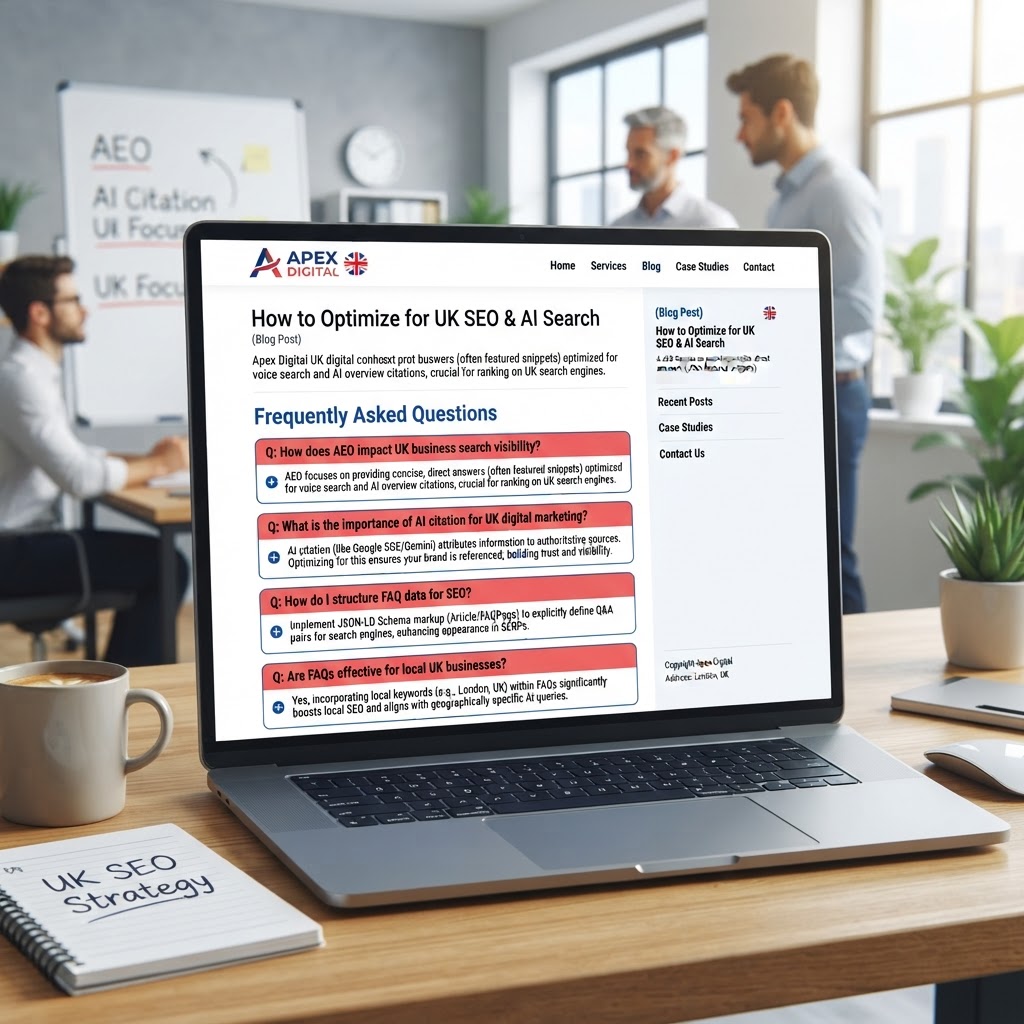
2. Implement FAQ and HowTo Schema
Structured data markup is non-negotiable for AEO. Adding FAQ schema to relevant pages tells search engines and AI crawlers exactly which sections of your content are questions and answers. HowTo schema achieves the same for process-based content. At STEPS Solutions, we implement schema markup as a standard part of every SEO and web development project for our Halifax and Yorkshire clients.
3. Target Conversational, Long-Tail Keywords
AI chatbots are trained on conversational language. Your keyword strategy in 2026 should prioritise natural language phrases and question-based queries over short, transactional keywords. Think "how do I improve my local SEO in Yorkshire" rather than just "local SEO Yorkshire". Tools like AlsoAsked, AnswerThePublic, and Google's People Also Ask section are invaluable for identifying these queries.
4. Build Topical Authority with Content Clusters
AI models don't just look at individual pages — they assess the breadth and depth of a site's knowledge on a topic. Building content clusters around your core subject areas (for example, a pillar page on digital marketing supported by detailed posts on SEO, social media, and web development) signals topical authority. This is a strategy STEPS Solutions applies consistently for clients across West Yorkshire and the wider UK.
5. Earn High-Quality Backlinks and Brand Mentions
Off-page authority still matters enormously in an AEO context. When respected publications, industry directories, and regional business networks mention or link to your brand, those signals feed into the trust calculations that AI models use. Local link-building — securing mentions from Yorkshire business associations, local press, and regional directories — is particularly valuable for SMEs.
6. Optimise for Voice Search and Conversational Queries
Voice assistants are answer engines too. Content that reads naturally, uses everyday language, and answers questions concisely is more likely to be read aloud by voice AI. Keep sentences short, avoid jargon where possible, and ensure your most important answers appear near the top of each page.
Measuring AEO Success: What to Track
Traditional SEO metrics like keyword rankings are only part of the picture in 2026. To measure AEO performance, UK businesses should also monitor:
- AI visibility: Manually test your target queries in ChatGPT, Perplexity, and Google AI Overviews to see if your brand or content is cited.
- Featured snippet capture rate: Featured snippets in Google remain a strong proxy for AI citation potential.
- Zero-click traffic trends: Track changes in branded search volume and direct traffic, which often increase when AI surfaces your brand.
- Share of voice in AI results: Emerging tools like Semrush's AI Toolkit and Profound are beginning to measure this directly.
- Engagement quality: Traffic arriving from AI citations tends to be high-intent — track time on site, enquiry rates, and conversion metrics carefully.
Key Takeaways
- AEO is now essential alongside traditional SEO — AI answer engines are handling a rapidly growing share of search queries in the UK and globally.
- Structure content with clear questions and direct answers to make it easy for AI models to extract and cite.
- Implement FAQ schema, HowTo schema, and Article schema to make your content machine-readable.
- Target conversational, long-tail keyword phrases that mirror how people talk to AI assistants.
- Build topical authority through content clusters and consistent publishing on your core subject areas.
- Earn quality backlinks and brand mentions — off-page authority influences AI trust signals.
- Measure performance across both traditional SEO metrics and AI-specific visibility indicators.
- Businesses in Halifax, Yorkshire, and across the UK that invest in AEO now will gain a durable competitive advantage as AI search continues to grow.
At STEPS Solutions, our team in Halifax works with businesses throughout Yorkshire and the wider UK to build digital strategies that perform in both traditional search and the emerging AI answer layer. If you'd like to understand how your current content performs for AEO, or if you're ready to future-proof your digital presence, get in touch with our team today.
Frequently Asked Questions
What is AEO (Answer Engine Optimisation)?
Answer Engine Optimisation (AEO) is the practice of optimising website content so that AI-powered answer engines — such as ChatGPT, Google Gemini, Microsoft Copilot, and Perplexity — retrieve and cite it when generating responses to user queries. It involves writing in a clear Q&A format, implementing structured data markup, targeting conversational keywords, and building topical authority so AI systems recognise your content as trustworthy and authoritative.
How is AEO different from traditional SEO?
Traditional SEO focuses on ranking your pages in a list of search results so users click through to your site. AEO focuses on ensuring AI systems select your content as the direct answer to a question, often without the user visiting your site at all. AEO prioritises clarity, factual accuracy, structured data, and question-based formatting, whereas traditional SEO places greater emphasis on keyword placement, backlink quantity, and page authority metrics.
How do I get my business cited by AI chatbots like ChatGPT or Perplexity?
To improve your chances of being cited by AI chatbots, structure your content in a clear question-and-answer format, implement FAQ and HowTo schema markup, build topical authority through content clusters, earn high-quality backlinks from reputable sources, and ensure your content demonstrates strong E-E-A-T (Experience, Expertise, Authoritativeness, and Trustworthiness) signals. Consistently publishing accurate, detailed, and well-organised content on your core subject areas is the most reliable long-term strategy.
Does AEO replace SEO, or should both be used together?
AEO does not replace traditional SEO — the two strategies are complementary and should be used together. Many of the foundations of good SEO (technical performance, quality backlinks, authoritative content) directly support AEO. However, AEO adds a layer of optimisation specifically targeted at AI answer engines, which now handle a significant share of search queries. UK businesses that invest in both approaches will achieve the broadest possible digital visibility in 2026 and beyond.
How can a small business in Yorkshire benefit from AEO?
Small and medium-sized businesses in Yorkshire can benefit significantly from AEO because it levels the playing field. You don't need a massive domain authority to be cited by AI — you need well-structured, accurate, and helpful content that directly answers the questions your customers are asking. By targeting local and industry-specific questions, implementing schema markup, and building local brand authority through regional directories and press, Yorkshire SMEs can achieve strong AI visibility even against larger national competitors. Agencies like STEPS Solutions in Halifax specialise in building these strategies for local businesses.