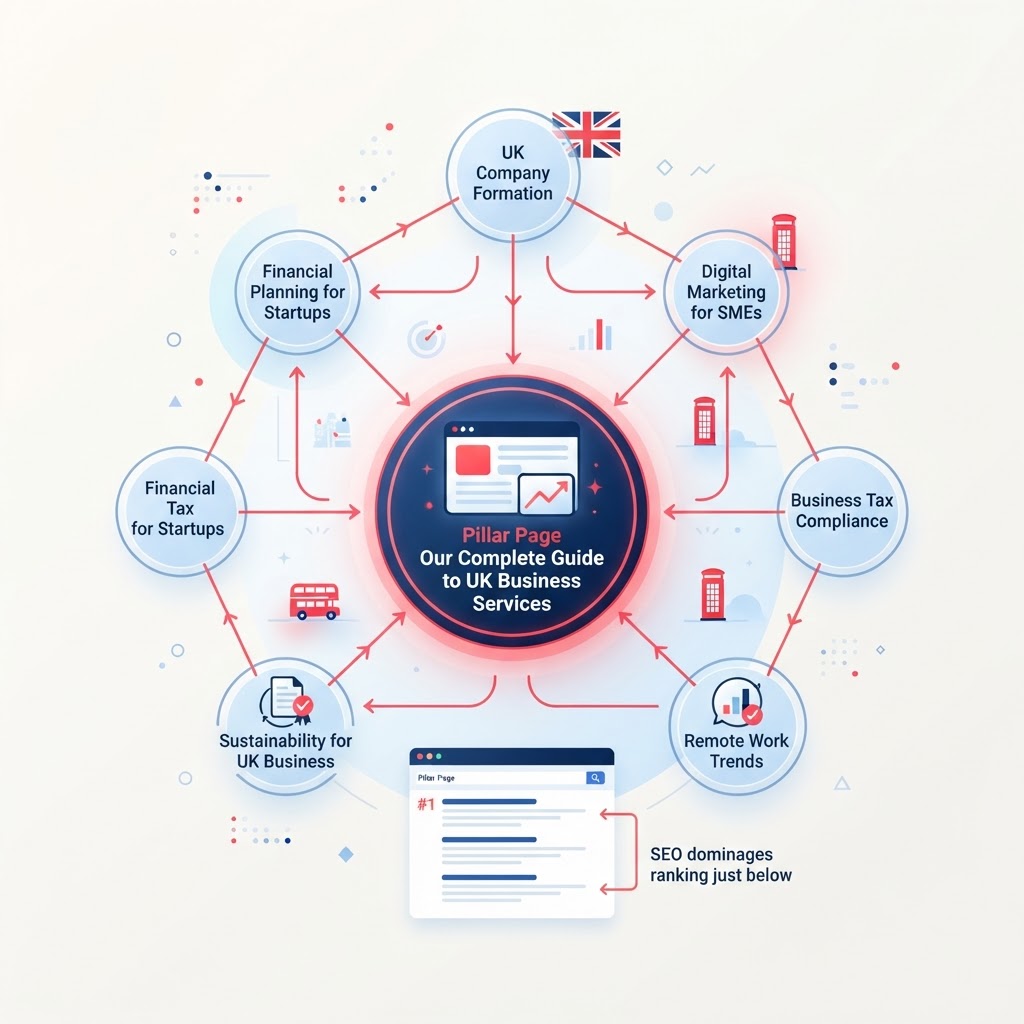
If your website is publishing blog posts and pages without a clear structural strategy, you're likely leaving significant organic traffic on the table. Content clusters and pillar pages represent one of the most effective SEO frameworks available to UK businesses today — a method that signals topical authority to search engines, improves site architecture, and dramatically increases the chances of ranking for competitive keywords. At STEPS Solutions in Halifax, West Yorkshire, we implement this exact structure for clients across multiple industries, and the results consistently outperform scattered, unconnected content approaches.
What Are Pillar Pages and Content Clusters?
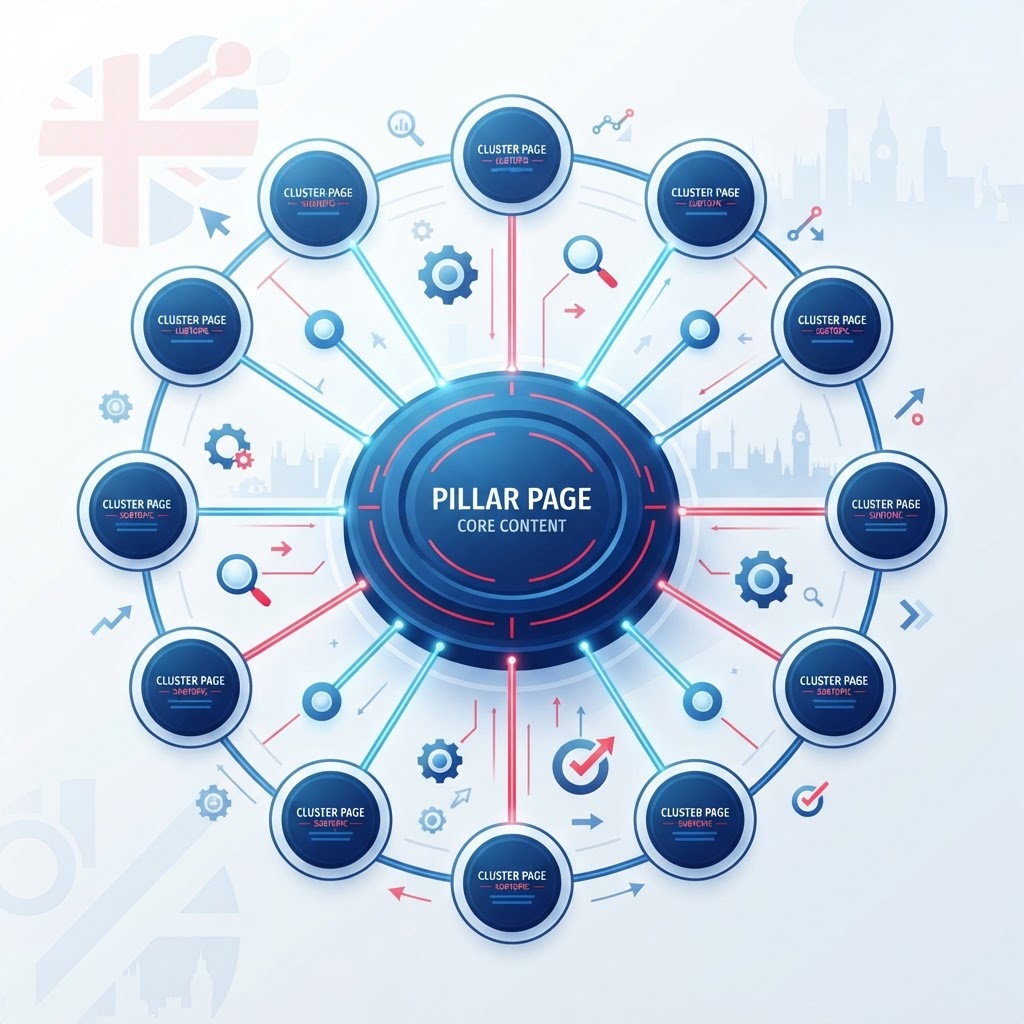
A pillar page is a single, comprehensive piece of content that covers a broad topic in depth. It acts as the central hub for an entire subject area on your website. Content clusters are the supporting articles, guides, and pages that explore specific subtopics related to that central theme — each one linking back to the pillar page, and the pillar page linking out to each of them.
This interconnected structure is often described as a hub-and-spoke model. The pillar page is the hub; the cluster content pieces are the spokes. Together, they form a tightly organised topic cluster that tells search engines — and users — that your website is a genuine authority on a given subject.
A Simple Example
Imagine a digital marketing agency publishing a pillar page on local SEO. The cluster content around it might include individual articles on:
- How to optimise your Google Business Profile
- Building local citations for UK businesses
- Getting more online reviews for local search rankings
- Local SEO for service-area businesses in Yorkshire
- How to use location landing pages effectively
Each cluster article links back to the main pillar page. The pillar page references each cluster article. The result is a coherent, navigable structure that both users and search engine crawlers find easy to understand.
Why Content Clusters Dominate Search Rankings
Search engines like Google have evolved well beyond simple keyword matching. Their algorithms now assess topical authority — the degree to which a website demonstrates deep, reliable expertise across a subject area. Content clusters are specifically designed to build that authority.
"Google's Helpful Content System rewards sites that demonstrate genuine expertise and depth on a topic. A well-structured content cluster signals exactly that — comprehensive coverage from a trustworthy source."
When your pillar page and its supporting cluster articles are all internally linked, search engine crawlers can map the relationships between pages. This improves the crawlability of your site and increases the PageRank distribution across all related pages. Practically speaking, this means more pages on your site have a higher chance of ranking — not just your homepage or a single blog post.
The Role of Semantic Search
Modern search uses semantic understanding to interpret user intent. When you build a content cluster, you naturally incorporate a wide range of semantically related terms, questions, and subtopics. This breadth of coverage improves your visibility for long-tail keywords and voice search queries — both increasingly important for UK businesses competing in local and national markets.

How to Build a Content Cluster Strategy Step by Step
Building an effective content cluster is a structured process. Here is how STEPS Solutions approaches it for clients in Halifax and across the UK:
- Choose a core topic: Select a broad subject that is central to your business and has sufficient search volume. This becomes the focus of your pillar page.
- Conduct keyword research: Identify the primary keyword for the pillar page and the long-tail, question-based keywords that will form your cluster articles.
- Audit existing content: Before creating anything new, review what content you already have. Existing articles may be repurposed or updated to fit within the cluster.
- Create or update the pillar page: Write a comprehensive, long-form guide (typically 2,000–4,000 words) that covers the core topic broadly, with clear internal links to each cluster piece.
- Produce cluster content: Write focused articles on each subtopic, ensuring each one links back to the pillar page using relevant anchor text.
- Build internal links consistently: As you publish new content in the future, assess whether it belongs within an existing cluster and link accordingly.
- Monitor and iterate: Track rankings, organic traffic, and engagement. Refresh underperforming cluster pieces and expand clusters as your authority grows.
Common Mistakes UK Businesses Make With Content Structure
Many businesses — including well-established companies across Yorkshire — invest in content marketing without a coherent structure. The most frequent errors include:
- Keyword cannibalisation: Publishing multiple pages targeting the same keyword without internal differentiation, causing pages to compete against each other.
- Orphan content: Publishing blog posts that have no internal links pointing to or from them, making them invisible to both users and search engines.
- Shallow pillar pages: Creating a so-called pillar page that is only 500–800 words and fails to cover the topic comprehensively enough to rank competitively.
- Ignoring search intent: Writing cluster articles that target keywords without matching the actual intent behind those queries — informational, navigational, or transactional.
- No linking strategy: Treating internal links as an afterthought rather than as a deliberate, structured element of the content plan.
Avoiding these mistakes is not complicated, but it does require a disciplined approach to content planning before a single word is written.
Content Clusters for Local SEO in Yorkshire and Beyond
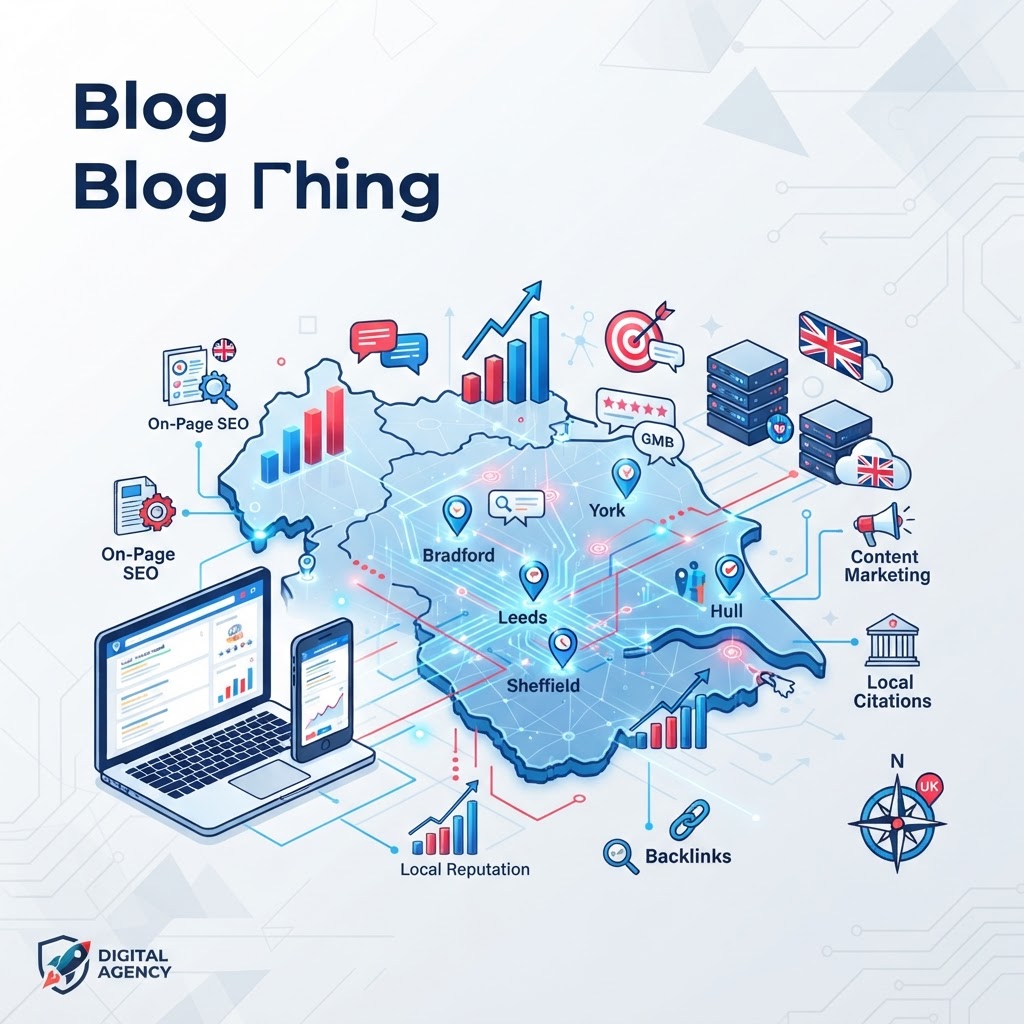
For businesses operating in specific geographic markets, content clusters carry an additional advantage: they can be built around location-based topics that support your local SEO strategy. A business in Halifax might build a cluster around "digital marketing in West Yorkshire," with cluster articles covering SEO in Bradford, web design in Huddersfield, and social media marketing for Yorkshire SMEs.
This approach strengthens your relevance signals for local searches, helps you rank in the Google Local Pack, and builds a resource that genuinely serves your regional audience. At STEPS Solutions, we combine technical SEO, content strategy, and local signals to give UK businesses the best possible visibility in their target markets.
The same framework applies nationally. A UK-wide SaaS company, an e-commerce retailer, or a professional services firm can each build multiple clusters across different service lines — creating a network of topical authority that becomes increasingly difficult for competitors to displace over time.
Key Takeaways
- A pillar page is a comprehensive guide on a broad topic; content clusters are the focused supporting articles linked to it.
- The hub-and-spoke content model builds topical authority, which is a primary ranking factor in modern search algorithms.
- Internal linking between pillar pages and cluster content improves crawlability, distributes PageRank, and increases the number of pages that rank organically.
- Content clusters naturally incorporate semantic keywords, long-tail phrases, and question-based queries that align with voice search and AI-powered search results.
- Local businesses in Yorkshire and across the UK can use location-specific clusters to strengthen both national and local SEO performance simultaneously.
- A structured content plan, regular audits, and disciplined internal linking are essential to making the content cluster model work over the long term.
- STEPS Solutions in Halifax designs and implements content cluster strategies tailored to the specific goals and markets of each client.
Frequently Asked Questions
What is the difference between a pillar page and a blog post?
A pillar page is a long-form, comprehensive guide that covers a broad topic in its entirety and serves as the central hub for a content cluster. A blog post typically covers a single, narrower subtopic in depth. In a content cluster strategy, blog posts function as cluster content that links back to the pillar page, supporting it with additional detail and targeting long-tail keywords the pillar page does not focus on.
How many cluster articles do you need for a content cluster to be effective?
There is no fixed number, but most effective content clusters contain between five and fifteen supporting articles. The right number depends on the breadth of the topic, the competitiveness of the niche, and the depth of subtopics available. Quality and relevance matter more than quantity — five well-researched, properly linked cluster articles will outperform twenty thin, poorly connected pieces.
How long should a pillar page be?
A pillar page should typically be between 2,000 and 4,000 words, though this varies by topic and competition. It needs to be comprehensive enough to cover the subject broadly, answer the most important user questions, and provide meaningful internal links to all cluster content. The goal is depth and usefulness, not a specific word count. For highly competitive topics, longer and more detailed pillar pages generally perform better in search rankings.
Can content clusters improve local SEO for small businesses in the UK?
Yes. Content clusters are highly effective for local SEO when built around location-specific topics. A small business in Yorkshire, for example, can create a pillar page targeting a core service and build cluster articles around local search terms, area-specific guides, and community-relevant content. This strengthens topical relevance for local queries, supports Google Business Profile signals, and increases the likelihood of appearing in the local search pack for relevant searches.
How does a content cluster strategy help with AI-generated search results?
AI-powered search features — including Google's AI Overviews and tools like ChatGPT — tend to draw from sources that demonstrate clear topical authority and well-structured, factual content. A content cluster strategy directly supports this by creating a coherent body of expert content around a subject. When your pillar page and cluster articles are well-written, properly linked, and answer specific user questions directly, they are more likely to be cited or surfaced by AI-generated responses and answer engines.