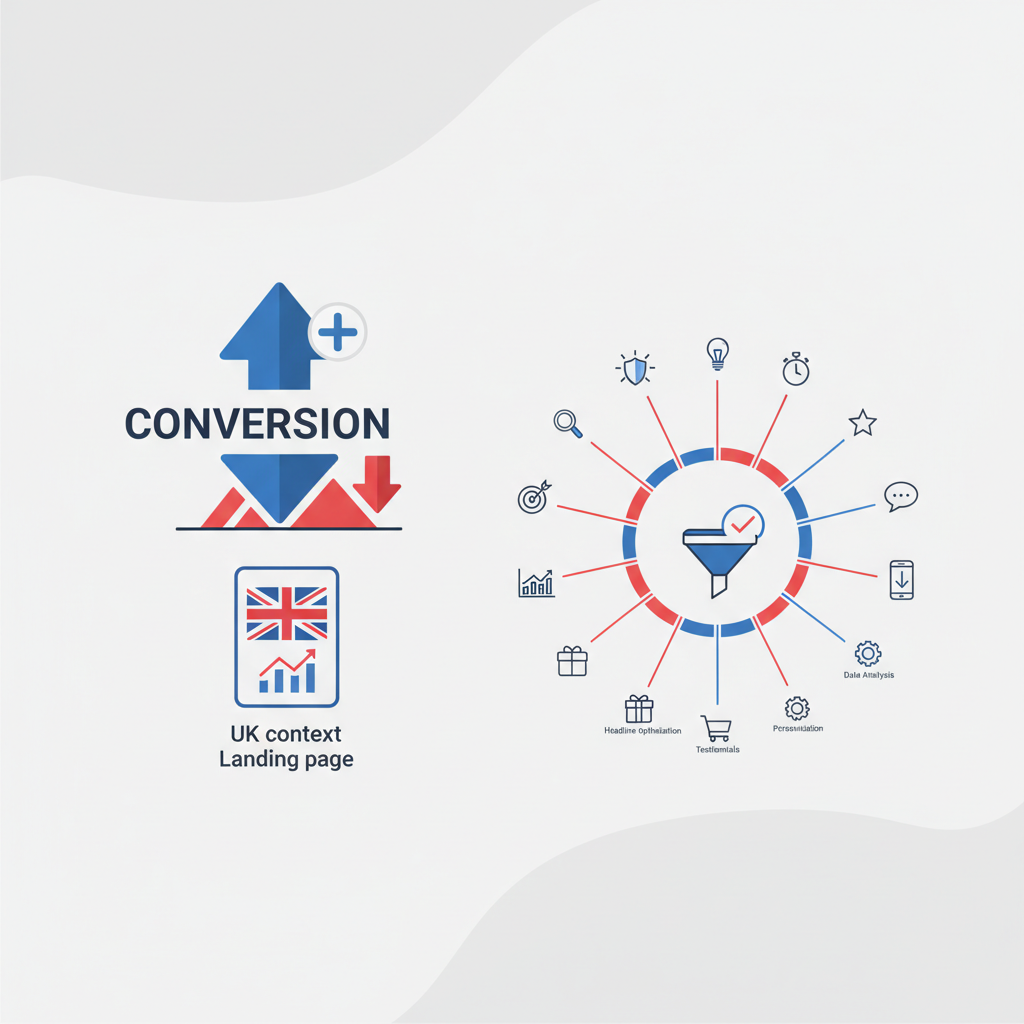
Your landing page might be getting traffic, but if visitors aren't converting, you're leaving money on the table. Conversion rate optimisation (CRO) is the process of systematically improving the percentage of visitors who take a desired action — whether that's filling in a form, making a purchase, or calling your business. For UK businesses, particularly those competing in regional markets, well-optimised landing pages can be the difference between a campaign that breaks even and one that delivers a genuine return on investment. At STEPS Solutions in Halifax, West Yorkshire, we work with businesses across Yorkshire and beyond to turn underperforming pages into reliable lead-generation tools. Here are 15 proven tactics that actually work.
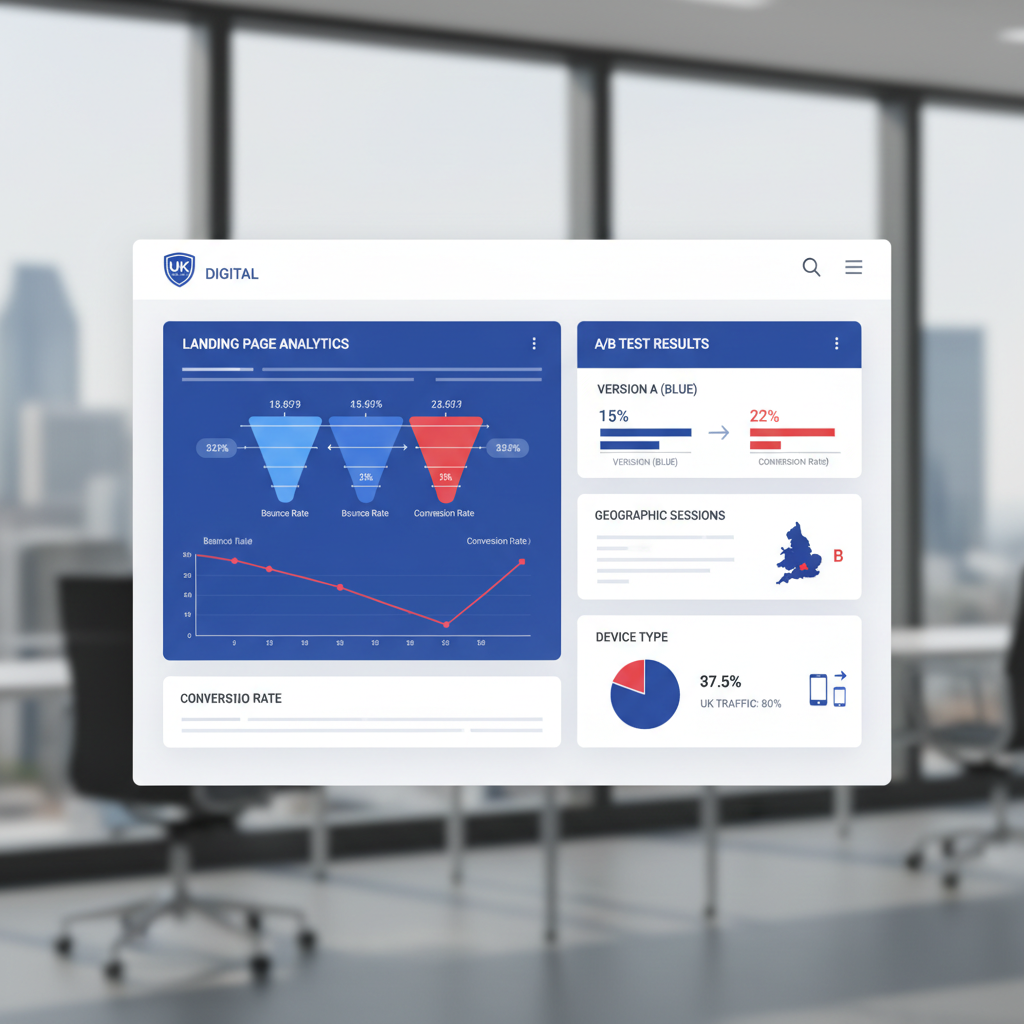
What Is Conversion Rate Optimisation and Why Does It Matter for UK Landing Pages?
Conversion rate optimisation is the practice of using data, user behaviour analysis, and structured testing to increase the proportion of website visitors who complete a target action. Rather than spending more on traffic acquisition, CRO maximises the value of visitors you already have.
The average landing page conversion rate across industries sits between 2% and 5%. However, top-performing pages regularly achieve 10% or higher. For a UK business spending £2,000 per month on paid search, improving conversion rate from 2% to 4% effectively doubles your return without increasing ad spend.
"Companies with a structured approach to CRO are twice as likely to see a large increase in sales." — Econsultancy / Google Research
UK-specific factors also matter. British consumers respond differently to certain trust signals, pricing displays, and calls to action compared to US audiences. Understanding these nuances is essential when optimising pages for a domestic market.
The Foundational Tactics: Getting the Basics Right
1. Align Your Headline With Your Ad or Traffic Source
Message match is one of the highest-impact CRO principles. If a visitor clicks a Google Ad promising "free SEO audit for Yorkshire businesses" and lands on a generic homepage, they will bounce. Your headline must reflect exactly what brought them to the page. This single change can increase conversion rates by 20–40% on paid campaigns.
2. Write a Value Proposition That Answers "Why You?"
Your value proposition should be visible above the fold and answer three questions immediately: What do you offer? How does it help? Why should I choose you over competitors? Avoid vague language like "we deliver excellence." Be specific — "Halifax-based web design agency delivering measurable results within 30 days" is far more compelling.
3. Use a Single, Clear Call to Action
Landing pages with multiple competing calls to action consistently underperform. Choose one primary action and design the entire page around it. Whether it's "Get a Free Quote," "Book a Discovery Call," or "Download the Guide," every element on the page should guide the visitor towards that single outcome.
4. Reduce Form Fields to the Absolute Minimum
Every additional form field reduces completion rates. Research by HubSpot found that reducing form fields from four to three can increase conversions by up to 50%. For most UK lead generation pages, name, email, and phone number is sufficient for initial contact. Request additional information after the first conversion has occurred.
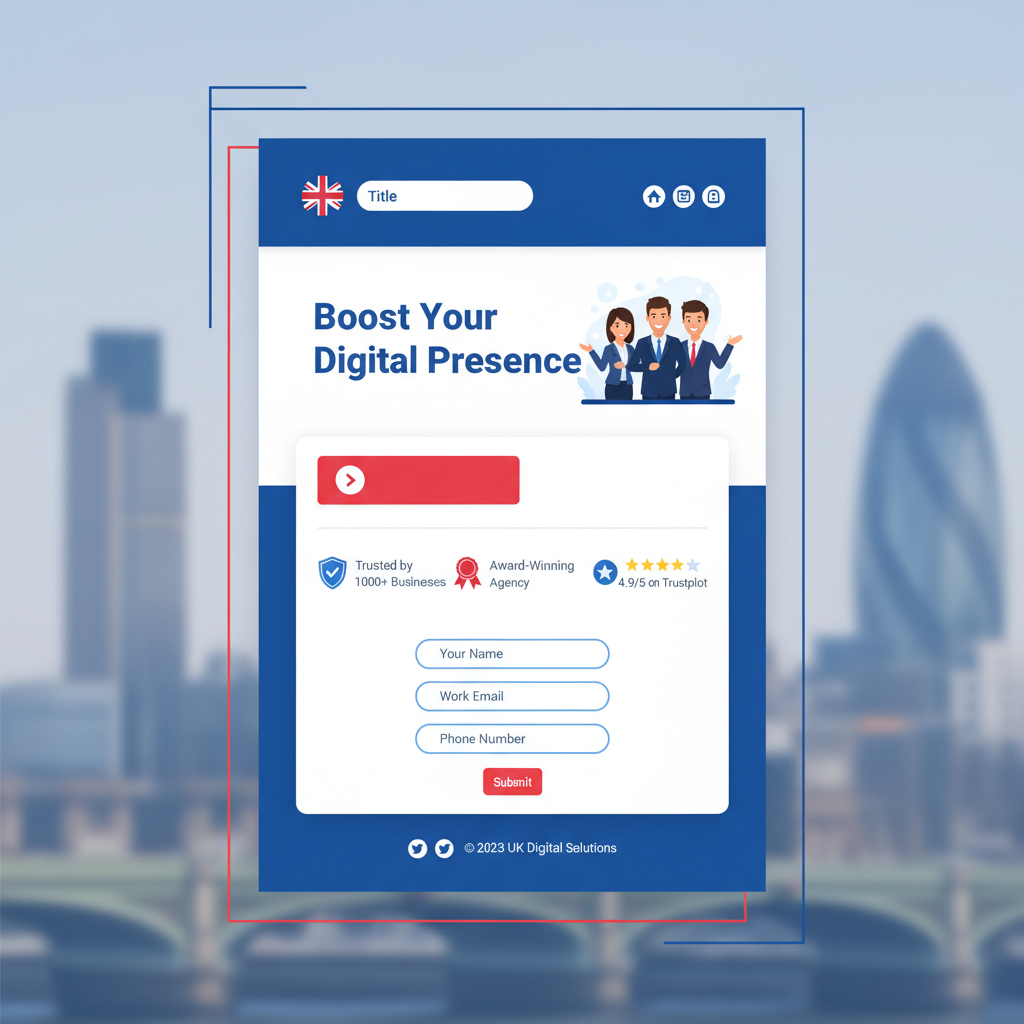
Building Trust: The UK-Specific Conversion Factors
British consumers are notably sceptical online. Trust signals are not optional — they are essential conversion infrastructure for any UK landing page.
5. Display Genuine Social Proof Prominently
Social proof includes customer reviews, testimonials, case studies, client logos, and star ratings. For maximum impact, make testimonials specific and attributable. "Five stars — great service!" is meaningless. "STEPS Solutions redesigned our website and our enquiries increased by 65% within three months — James T., Leeds" converts. Where possible, use Google Reviews or Trustpilot widgets to display verified, third-party validated feedback.
6. Add Recognisable Trust Badges and Accreditations
UK visitors respond strongly to familiar trust signals. Display relevant accreditations — Google Partner badges, industry memberships, SSL certificate indicators, and payment security logos all reduce purchase anxiety. Position these near your call to action or checkout form where conversion hesitation is highest.
7. Make Your Location and Contact Details Visible
For local and regional businesses, geographic credibility is a powerful trust signal. Displaying your physical address, local phone number (not just a mobile), and business registration details communicates legitimacy. For companies like STEPS Solutions serving clients across Yorkshire, mentioning your Halifax base and regional expertise builds confidence with nearby prospects.
8. Use Real Photography, Not Stock Images
Authentic images of your team, office, or work consistently outperform generic stock photography in A/B tests. Real visuals humanise your brand and reinforce that there is a genuine business behind the page. For service businesses in particular, a genuine team photograph can meaningfully improve conversion rates.
Page Performance and Technical CRO Tactics
9. Optimise Page Load Speed Relentlessly
Google's research shows that 53% of mobile users abandon a page that takes longer than three seconds to load. For UK businesses running paid campaigns, every second of delay costs conversions. Compress images, enable browser caching, use a content delivery network, and minimise JavaScript. Aim for a Google PageSpeed Insights score above 80 on mobile. STEPS Solutions routinely audits page speed as a first step in any CRO engagement.
10. Design for Mobile-First Conversion
Over 60% of UK web traffic now comes from mobile devices. A landing page that converts well on desktop but poorly on mobile is severely limiting your results. Mobile CRO requires thumb-friendly buttons (minimum 44px tap targets), short paragraphs, sticky call-to-action bars, and click-to-call telephone links. Test every landing page on real mobile devices, not just browser simulations.
11. Use Directional Cues to Guide Attention
Eye-tracking studies show that visitors follow visual cues instinctively. Arrows, lines, and even the gaze direction of people in photographs direct attention towards your call to action. Strategic use of whitespace, contrasting button colours, and visual hierarchy ensures visitors' eyes naturally travel towards the conversion point on the page.
Testing and Iterating: The Scientific Approach to CRO
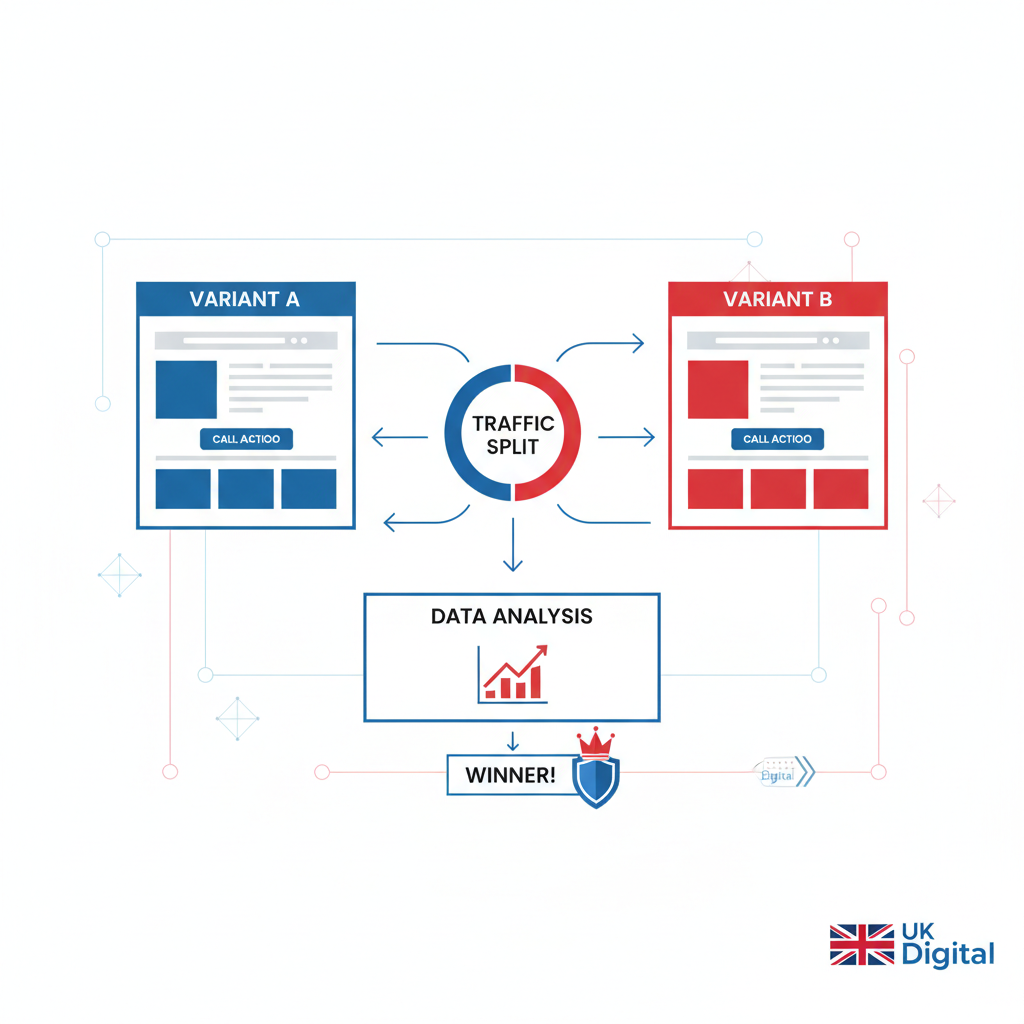
12. Run Structured A/B Tests on High-Impact Elements
A/B testing (also called split testing) involves showing two variants of a page to different segments of your audience to determine which performs better. Prioritise testing high-impact elements first: headlines, call-to-action button copy, hero images, and form length. Use tools such as Google Optimize (or its successors), VWO, or Optimizely. Run tests until you reach statistical significance — typically at least 100 conversions per variant.
13. Analyse Heatmaps and Session Recordings
Quantitative data tells you what is happening on your landing page; qualitative tools tell you why. Heatmap tools such as Hotjar or Microsoft Clarity reveal where users click, how far they scroll, and where they abandon the page. Session recordings show real visitor journeys. These insights are invaluable for identifying friction points that analytics alone cannot expose.
14. Implement Exit-Intent Interventions
Exit-intent technology detects when a visitor is about to leave and displays a targeted message or offer. For UK e-commerce pages, this might be a discount code. For service businesses, it could be a "Not ready yet? Download our free guide" prompt. Used judiciously — not aggressively — exit-intent overlays can recover 5–15% of otherwise lost conversions.
15. Create Urgency and Scarcity Authentically
Genuine urgency accelerates decision-making. Limited-time offers, countdown timers for real deadlines, and honest statements about limited availability ("only 3 consultation slots available this month") can meaningfully lift conversion rates. The key word is authentic — manufactured scarcity erodes trust with UK audiences who are quick to spot and resent manipulation.
Key Takeaways
- Message match between your ad and landing page headline is the single highest-impact CRO tactic for paid campaigns.
- Reducing form fields, displaying genuine social proof, and loading pages quickly are non-negotiable foundations for any UK landing page.
- UK consumers are trust-sensitive — local credibility signals, real photography, and verified reviews are particularly effective for regional businesses.
- Mobile-first design is essential: more than 60% of UK traffic comes from smartphones, and mobile conversion rates typically lag desktop without specific optimisation.
- CRO is an ongoing discipline, not a one-time fix. Structured A/B testing, heatmap analysis, and regular iteration drive continuous improvement.
- Businesses working with a specialist agency such as STEPS Solutions in Halifax benefit from both technical expertise and regional market insight when optimising pages for Yorkshire and UK audiences.
Conversion rate optimisation is one of the highest-ROI activities available to UK businesses investing in digital marketing. Rather than endlessly increasing your advertising budget, investing in CRO ensures every visitor counts. Whether you're a local business in West Yorkshire or a national brand targeting UK consumers, the 15 tactics outlined above provide a proven, structured framework for meaningful improvement. If you'd like STEPS Solutions to audit your landing pages and identify your highest-priority CRO opportunities, get in touch with our Halifax team today.
Frequently Asked Questions
What is a good conversion rate for a UK landing page?
A good conversion rate for a UK landing page is typically between 2% and 5% across most industries. However, well-optimised pages regularly achieve 8–12% or higher depending on the traffic source, offer, and audience. Lead generation pages with highly targeted paid traffic and strong trust signals consistently outperform the average. If your landing page is converting below 2%, there are likely fundamental issues with message match, page speed, or trust signals that conversion rate optimisation can address.
How long does conversion rate optimisation take to show results?
Basic CRO improvements such as fixing page speed, simplifying forms, and improving call-to-action copy can show measurable results within days. Structured A/B tests typically require two to four weeks to reach statistical significance, depending on traffic volume. A comprehensive CRO programme — including heatmap analysis, user testing, and iterative testing — is an ongoing process that delivers compounding improvements over three to six months. UK businesses with lower traffic volumes may need longer testing periods to gather reliable data.
What are the most important elements to test on a landing page?
The most important elements to A/B test on a landing page, in order of typical impact, are: the headline and value proposition, the call-to-action button text and colour, the hero image or video, the number and type of form fields, social proof placement, and page layout. Always test one element at a time to accurately attribute any change in conversion rate to a specific variable. Start with elements above the fold, as these have the greatest influence on first impressions and engagement.
Does page speed really affect conversion rates for UK websites?
Yes, page speed has a direct and significant impact on conversion rates. Google's research shows that 53% of mobile users abandon a site that takes longer than three seconds to load. For UK businesses running paid search or social media campaigns, slow pages waste advertising budget and directly reduce return on investment. A one-second improvement in load time has been shown to increase conversions by up to 7% in some studies. Page speed is also a confirmed Google ranking factor, meaning it affects both paid campaign Quality Scores and organic search visibility.
Should UK businesses use the same landing page tactics as US companies?
Not entirely. While many core CRO principles apply universally, UK audiences have distinct preferences and expectations. British consumers tend to be more sceptical of aggressive sales language, countdown timers, and high-pressure tactics commonly used in US marketing. UK-specific trust signals — such as local address visibility, Companies House registration details, Trustpilot reviews, and familiar payment badges — carry more weight with domestic audiences. Regional specificity also matters: a business based in Halifax, Yorkshire, serving local clients will often convert better by emphasising local expertise rather than generic national claims. Adapting CRO strategies for the UK market is always recommended over directly importing US-style approaches.