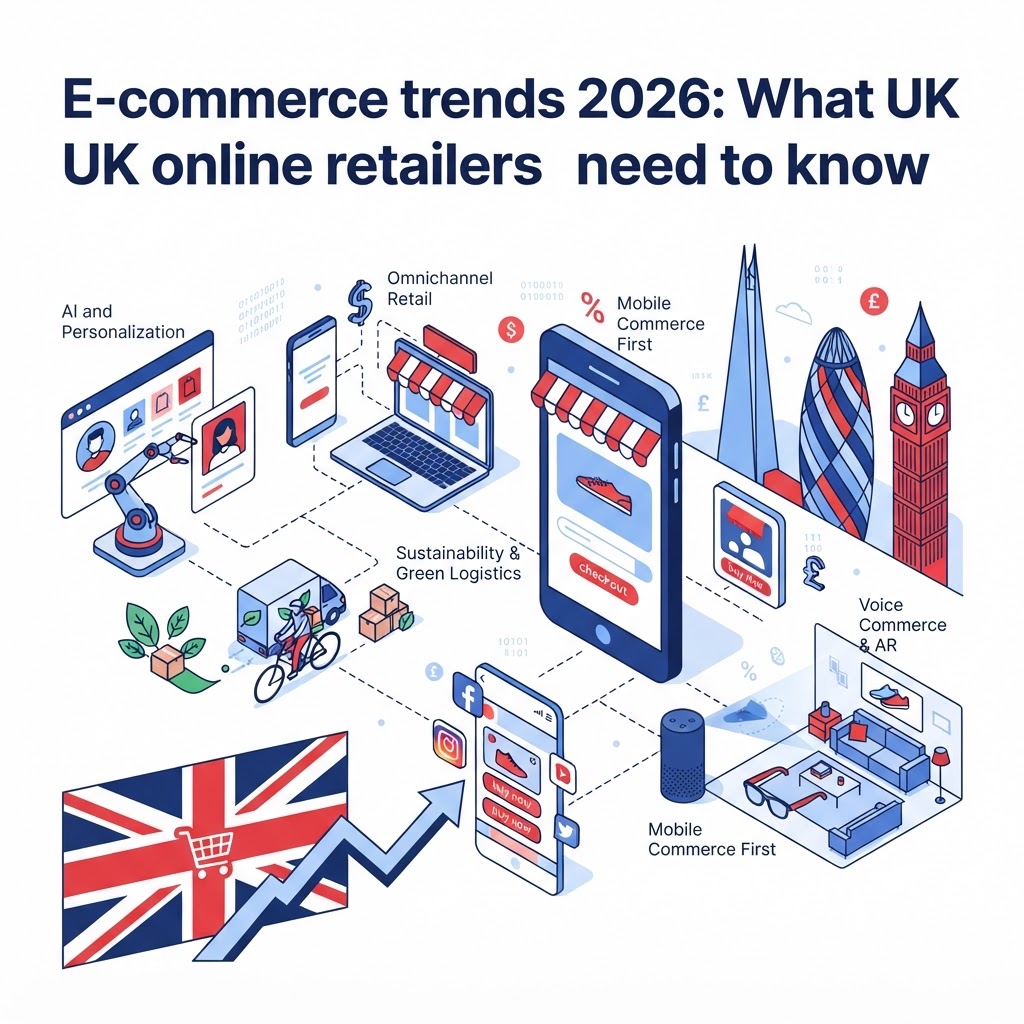
The UK e-commerce landscape is evolving faster than ever. With consumer expectations shifting, new technologies maturing, and economic pressures reshaping buying behaviour, online retailers in 2026 face both significant challenges and genuine opportunities. Whether you run a small independent shop or a scaling mid-market brand, understanding the key e-commerce trends for 2026 is essential to staying competitive. At STEPS Solutions in Halifax, West Yorkshire, we work closely with UK businesses navigating exactly these changes — and this guide distils what you genuinely need to know.
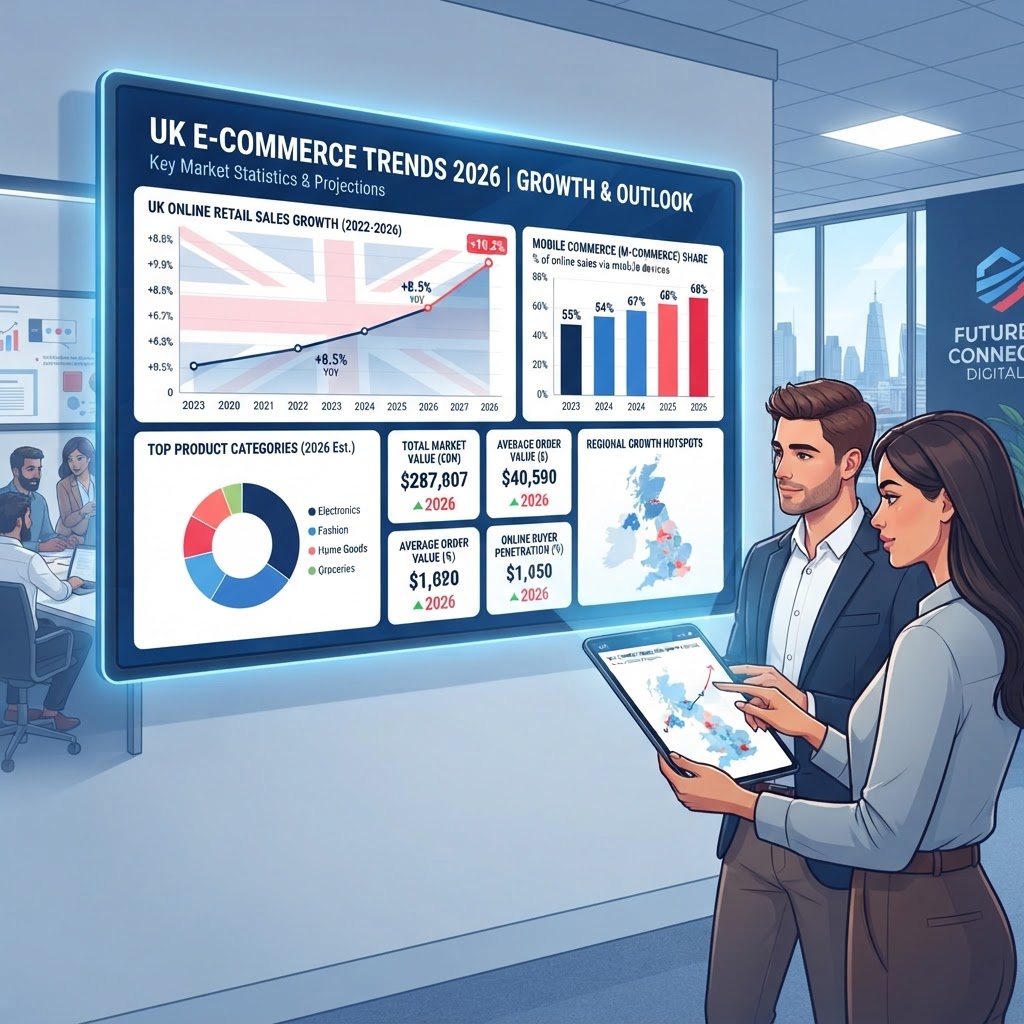
1. AI-Powered Personalisation Is Now a Baseline Expectation
In 2026, artificial intelligence in e-commerce has moved from a competitive advantage to a customer expectation. Shoppers now expect product recommendations, dynamic pricing, and personalised email journeys that feel genuinely tailored — not generic.
What this means for UK online retailers
- Product recommendation engines powered by machine learning now drive measurable uplift in average order value — typically 10–30% when implemented correctly.
- AI-generated search on-site (conversational product search) is replacing traditional keyword-based filtering, particularly on mobile.
- Predictive inventory management is reducing overstock and stockout rates for retailers using AI-integrated platforms.
- Email and SMS personalisation tools are now accessible to SMEs, not just enterprise retailers, through platforms like Klaviyo, Omnisend, and Shopify's native AI features.
For Yorkshire retailers especially, personalisation tools that reflect regional preferences and local identity can create a meaningful brand distinction that larger national competitors struggle to replicate.
2. The Rise of Social Commerce and Shoppable Content
Social commerce — the ability to discover and purchase products directly within social media platforms — has become a primary sales channel for UK consumer brands in 2026. TikTok Shop, Instagram Shopping, and Pinterest's shoppable pins are no longer optional extras; they are core revenue streams for forward-thinking retailers.
"UK social commerce revenues are forecast to exceed £16 billion by 2026, with TikTok Shop alone accounting for a rapidly growing share of impulse-driven purchases among 18–34 year olds." — Statista / eMarketer composite forecast, 2024
Key actions for retailers
- Ensure your product catalogue is synced with Meta, TikTok, and Pinterest commerce tools.
- Invest in short-form video content that demonstrates products in real-world use — this drives the highest conversion rates on TikTok and Instagram Reels.
- Use user-generated content (UGC) as a trust signal within shoppable posts.
- Track attribution carefully — last-click models undervalue social commerce significantly.
At STEPS Solutions, our social media management service helps UK retailers build and execute social commerce strategies that connect directly to their e-commerce platforms, reducing friction between discovery and purchase.
3. Sustainability and Ethical Shopping Are Driving Purchase Decisions
UK consumers in 2026 are increasingly making purchasing decisions based on a brand's environmental and ethical credentials. This is not a niche trend — it is mainstream. Research consistently shows that a significant proportion of UK shoppers, particularly those under 45, will pay a premium for sustainable products or switch brands based on environmental policy.
What UK online retailers should do:
- Display clear, verifiable sustainability claims on product pages — vague greenwashing is now actively penalised by consumer trust and, increasingly, by UK advertising standards.
- Offer carbon-neutral delivery options at checkout — even if they carry a small surcharge, a meaningful segment of customers will select them.
- Highlight packaging practices, ethical sourcing, and supply chain transparency in your brand story.
- Consider B Corp certification or equivalent credentialling if your business model genuinely supports it.
For independent and regional retailers across Yorkshire and the wider UK, authentic sustainability narratives that connect to local community and craftsmanship can be particularly powerful differentiators.
4. Mobile-First Is Now Mobile-Only for Many Shoppers
By 2026, over 70% of UK e-commerce transactions are initiated on a mobile device. For many demographics — particularly under-35s and social media-referred traffic — mobile is the only device they use for online shopping. This makes mobile-first website development not just best practice but a commercial necessity.
Mobile e-commerce priorities in 2026
- Core Web Vitals compliance: Google's page experience signals directly affect your organic rankings. Slow loading, layout shifts, and poor interactivity cost you both traffic and conversions.
- Progressive Web Apps (PWAs): PWAs offer app-like experiences without requiring app store downloads — adoption is accelerating among mid-market UK retailers.
- One-page checkout: Reducing checkout steps on mobile is one of the highest-ROI optimisations available. Every additional screen increases abandonment.
- Digital wallet integration: Apple Pay, Google Pay, and PayPal One Touch are now expected at checkout — not having them will lose sales.
The team at STEPS Solutions in Halifax builds e-commerce websites with mobile performance at the core of every development decision, ensuring UK businesses don't lose customers at the most critical moment.
5. Local SEO and Hyperlocal E-Commerce Are Growing in Importance
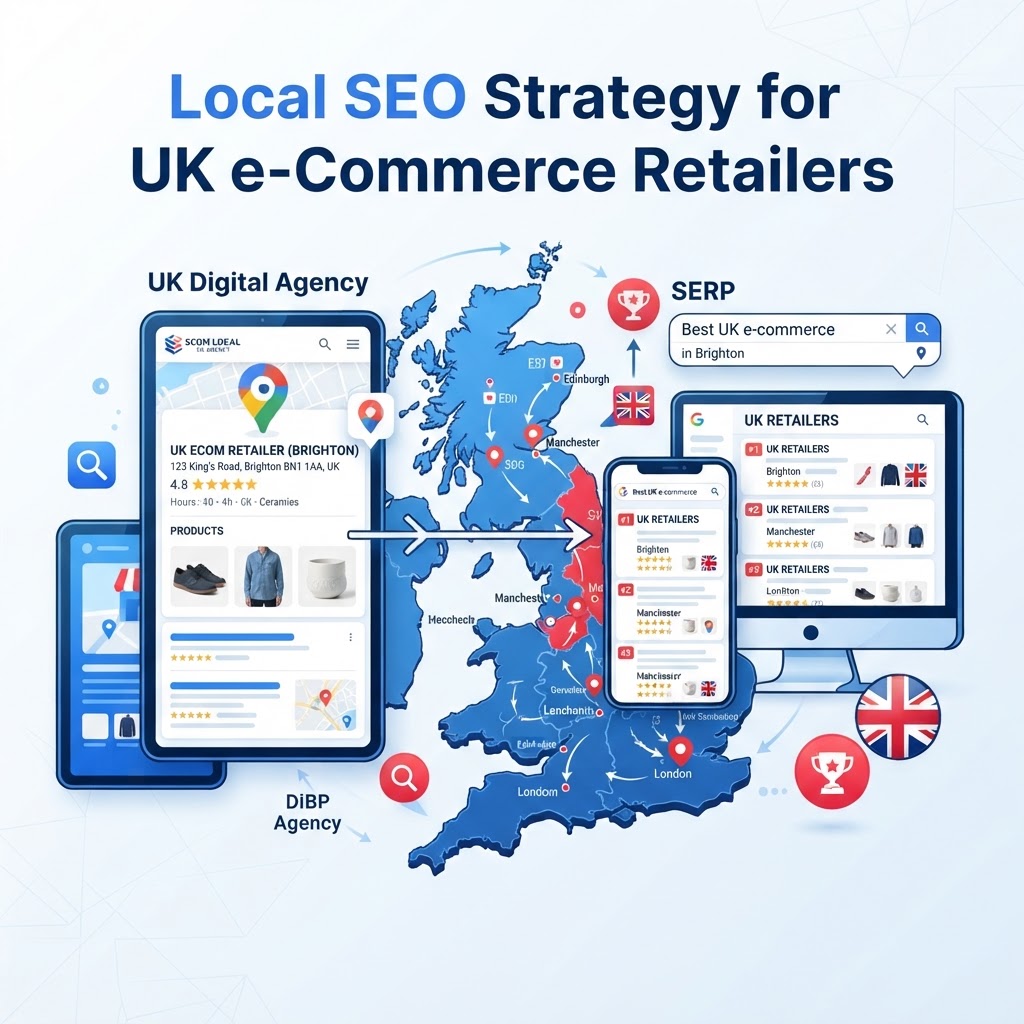
An often-overlooked trend: local SEO for e-commerce is becoming increasingly valuable, even for businesses that sell nationally. Google's search algorithms in 2026 continue to weight local relevance highly, and consumers are actively seeking to buy from UK-based businesses — a trend accelerated by supply chain concerns and a growing preference for domestic brands.
For retailers based in regions like Yorkshire, optimising for local search terms, maintaining an accurate and active Google Business Profile, and building local backlink authority can deliver substantial organic visibility that national competitors cannot easily replicate.
STEPS Solutions provides specialist local SEO and national SEO services tailored for UK businesses — helping e-commerce brands appear prominently in both local and broader search results, including AI-generated answer results and Google's Search Generative Experience.
6. Generative AI Search Is Changing How Customers Discover Products
Perhaps the most structurally significant trend for 2026 is the integration of generative AI into search engines. Google's AI Overviews, Bing Copilot, and standalone AI tools like ChatGPT and Perplexity are now a primary discovery channel for product research. This has profound implications for how UK retailers approach their content strategy and SEO.
To appear in AI-generated search answers and product recommendations, retailers must:
- Create structured, factual product content that answers specific questions — not just keyword-stuffed descriptions.
- Use schema markup (Product, Review, FAQ, and Offer schemas) to make product data machine-readable.
- Build topical authority through blog content, buying guides, and educational resources in your niche.
- Earn citations from credible sources — backlinks and brand mentions from authoritative UK sites improve the likelihood of AI models citing your content.
This is precisely why GEO (Generative Engine Optimisation) and AEO (Answer Engine Optimisation) are now integral parts of a modern SEO strategy — not optional add-ons. Businesses that adapt their content structure to serve both human readers and AI models will capture a disproportionate share of organic and AI-referred traffic in 2026 and beyond.
Key Takeaways
- AI personalisation is now expected by UK shoppers — invest in recommendation and automation tools appropriate for your scale.
- Social commerce is a primary revenue channel in 2026 — sync your catalogue and create shoppable video content.
- Sustainability claims must be genuine and verifiable — consumers and regulators are scrutinising greenwashing.
- Mobile-first development is non-negotiable — optimise Core Web Vitals, checkout flow, and payment options.
- Local SEO delivers competitive advantage for regional UK retailers, even those selling nationally.
- Generative AI search is reshaping product discovery — structured content, schema markup, and topical authority are essential.
- Working with a specialist digital agency like STEPS Solutions in Halifax can help Yorkshire and wider UK businesses implement these strategies efficiently and measurably.
Frequently Asked Questions
What are the biggest e-commerce trends in the UK for 2026?
The biggest UK e-commerce trends for 2026 include AI-powered personalisation, the growth of social commerce on TikTok and Instagram, increasing consumer demand for sustainable and ethical brands, mobile-first shopping experiences, local and hyperlocal SEO for online retailers, and the impact of generative AI search tools on product discovery. Retailers who adapt to these trends early will gain a measurable competitive advantage.
How is AI changing e-commerce for UK retailers in 2026?
AI is transforming UK e-commerce in multiple ways: personalised product recommendations, conversational on-site search, predictive inventory management, automated email and SMS marketing, and — critically — AI-generated search results that change how consumers discover products online. Retailers need to optimise their content for AI-powered search engines (GEO and AEO) as well as traditional SEO.
What is social commerce and why does it matter for UK online shops?
Social commerce refers to the ability to discover and purchase products directly within social media platforms such as TikTok Shop, Instagram Shopping, and Pinterest. It matters for UK retailers because it reduces friction in the purchase journey, reaches younger demographics where they already spend time, and generates impulse-driven sales. UK social commerce revenues are forecast to exceed £16 billion by 2026.
How can UK e-commerce businesses improve their mobile performance?
UK e-commerce businesses can improve mobile performance by ensuring Core Web Vitals compliance (fast load times, stable layouts, responsive interactivity), simplifying checkout to as few steps as possible, integrating digital wallets like Apple Pay and Google Pay, and considering Progressive Web App (PWA) technology for app-like experiences. Over 70% of UK e-commerce transactions in 2026 are initiated on mobile devices, making this a critical priority.
What is GEO (Generative Engine Optimisation) and do UK retailers need it?
Generative Engine Optimisation (GEO) is the practice of structuring website content so that AI-powered search engines — such as Google's AI Overviews, Bing Copilot, and tools like ChatGPT — can accurately parse, cite, and surface your content in AI-generated answers. UK retailers need GEO in 2026 because a growing proportion of product research now starts with an AI assistant rather than a traditional search query. Key GEO tactics include structured factual content, FAQ sections, schema markup, and building topical authority through expert blog content.