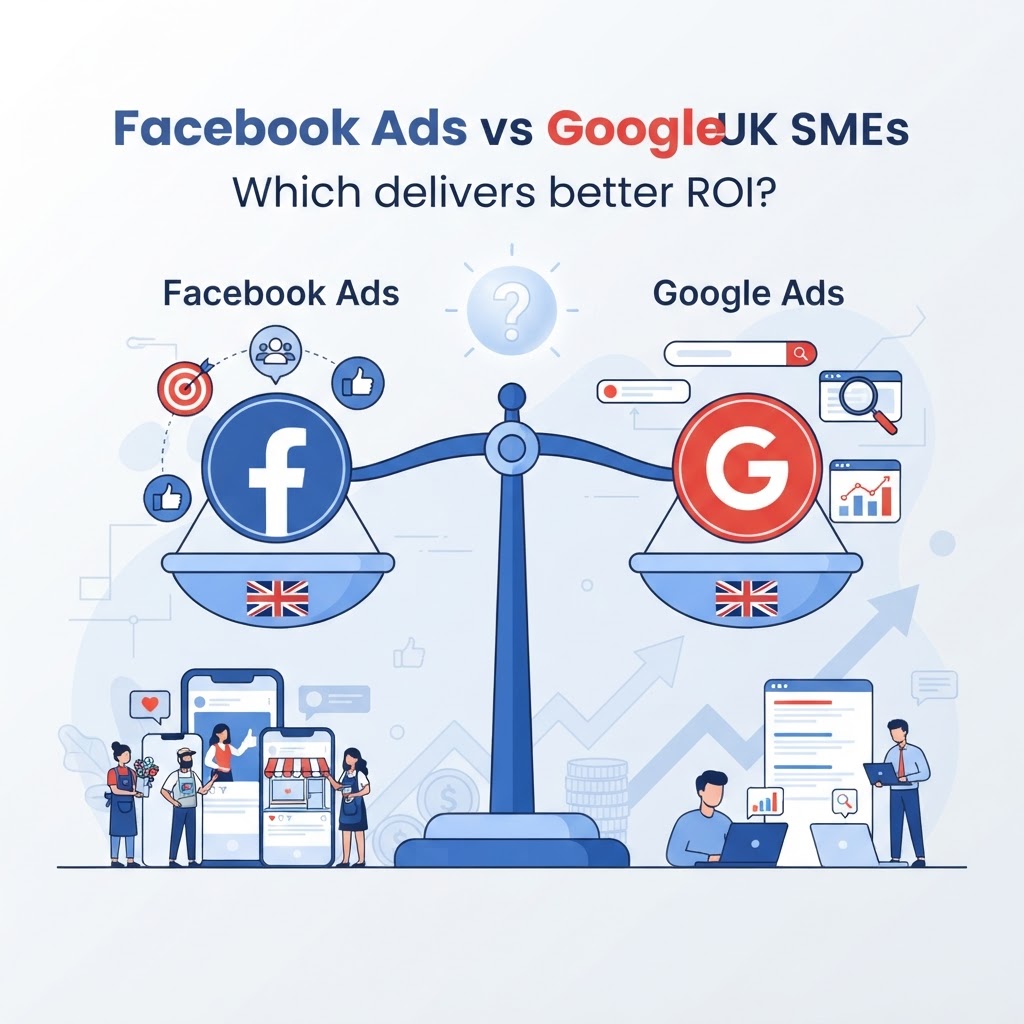
For UK small and medium-sized businesses, every pound of marketing budget matters. Whether you're a retailer in Halifax, a professional services firm in Leeds, or an e-commerce brand serving customers across Yorkshire and beyond, choosing between Facebook Ads and Google Ads is one of the most consequential decisions you'll make for your digital marketing strategy. Both platforms offer powerful targeting, measurable results, and genuine ROI — but they work in fundamentally different ways. This guide breaks down exactly how each platform performs for UK SMEs, so you can invest with confidence.
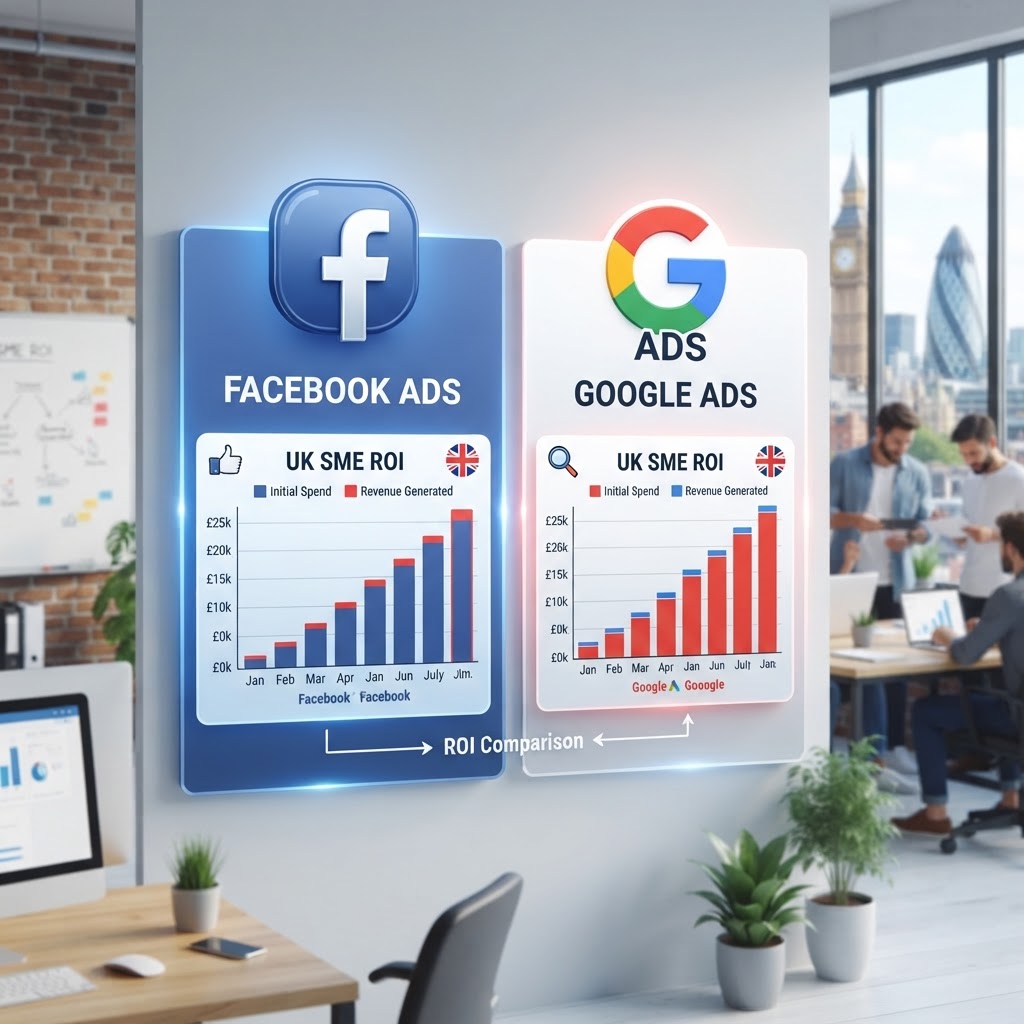
Understanding the Core Difference: Intent vs Discovery
Before comparing costs and conversion rates, it's essential to understand the philosophical difference between these two advertising platforms. This distinction shapes everything — from how you write your ads to what ROI you should realistically expect.
Google Ads: Capturing High-Intent Demand
Google Ads (formerly Google AdWords) operates on a pull marketing model. Users actively search for a product or service, and your ad appears in response. When someone in Bradford searches "emergency plumber near me" or "accountant in Halifax," they already have a problem and are actively seeking a solution. This high purchase intent is what makes Google Ads particularly powerful for service-based businesses and time-sensitive purchases.
Facebook Ads: Generating Demand Through Discovery
Facebook Ads (which also includes Instagram, Messenger, and the Meta Audience Network) operates on a push marketing model. You identify an audience based on demographics, interests, and behaviours, then serve ads to people who aren't necessarily looking for your product right now. This makes Facebook Ads exceptionally effective for brand awareness, remarketing, and lifestyle-driven products where visual storytelling drives purchases.
Cost Comparison: What UK Businesses Actually Pay
Cost is one of the first questions UK SMEs ask when evaluating these platforms. Here's a realistic breakdown based on current UK market data.
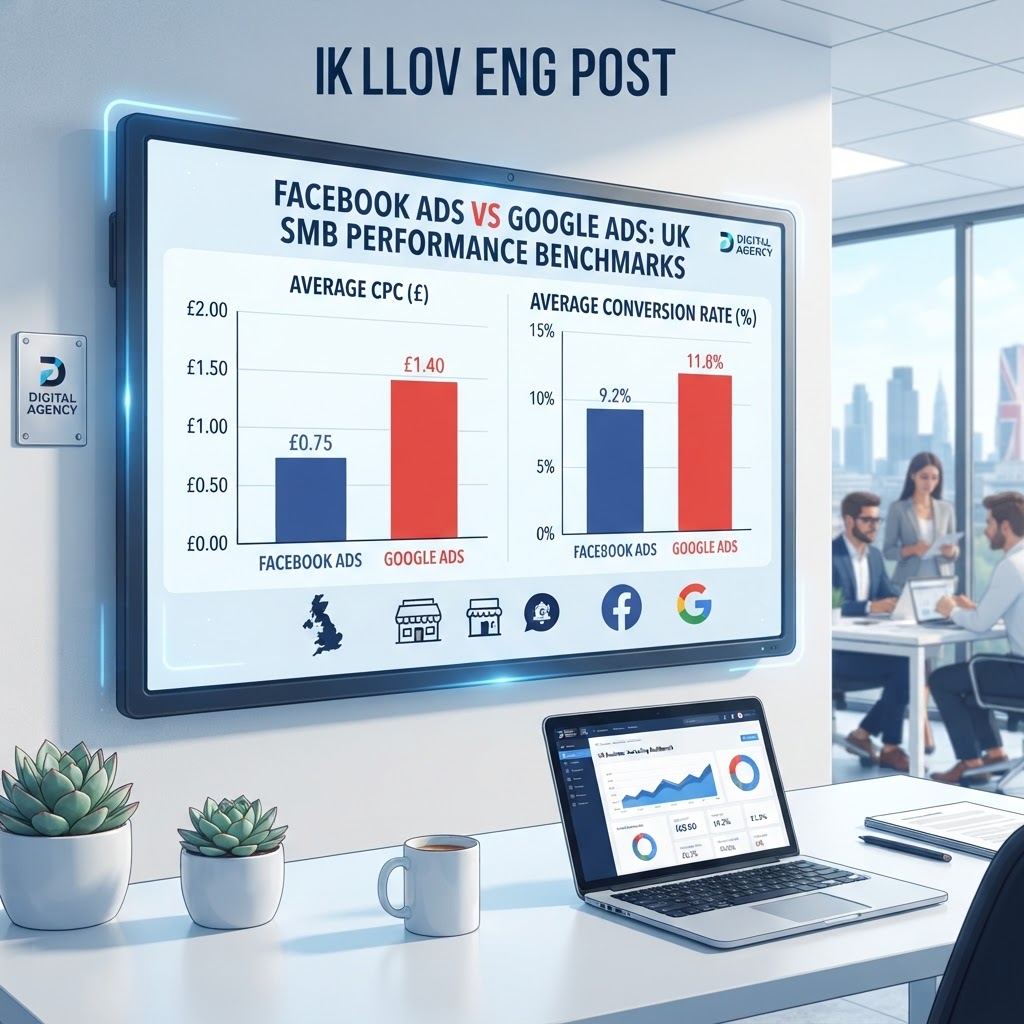
"The average Cost Per Click (CPC) for Google Ads in the UK ranges from £0.50 to £3.00 for most industries, but competitive sectors like legal services, finance, and insurance can see CPCs exceeding £20–£50 per click. Facebook Ads typically deliver CPCs between £0.30 and £1.50, making them more accessible for SMEs with tighter budgets."
Key Cost Metrics to Compare
- Google Ads Average CPC (UK): £1.00–£3.00 (general); £10–£50+ (competitive niches)
- Facebook Ads Average CPC (UK): £0.30–£1.50
- Google Ads Average Conversion Rate: 3–5% across most industries
- Facebook Ads Average Conversion Rate: 1–3% (varies significantly by creative quality)
- Google Ads Average Cost Per Acquisition (CPA): £20–£60 for SME sectors
- Facebook Ads Average CPA: £10–£40 for well-optimised campaigns
It's worth noting that lower CPC doesn't automatically mean better ROI. A £5 Google click that converts to a £500 sale outperforms a £0.50 Facebook click that rarely converts. The metric that truly matters is cost per acquisition relative to customer lifetime value.
Which Platform Delivers Better ROI? It Depends on Your Business Type
At STEPS Solutions, we work with businesses across Halifax, Yorkshire, and across the UK, and the honest answer is: it depends on your business model, objectives, and customer journey. Here's a practical breakdown by business type.
Google Ads Works Best For:
- Local service businesses — plumbers, electricians, solicitors, dentists in Halifax and surrounding areas
- B2B companies targeting decision-makers who search with specific commercial intent
- Emergency or urgent services where customers need a solution immediately
- High-ticket products or services where purchase decisions are research-driven
- Businesses with established local SEO looking to complement organic search with paid visibility
Facebook Ads Works Best For:
- E-commerce and retail brands with visually appealing products
- Lifestyle, fashion, food, and wellness brands where aspiration drives purchase
- Businesses targeting specific demographic groups (age, location, interests)
- Brands investing in remarketing to re-engage website visitors who didn't convert
- Businesses with a strong social media presence looking to amplify content and build community
- New businesses building brand awareness in a specific region like Yorkshire
The Role of the Marketing Funnel
One of the most effective strategies UK businesses can adopt is using both platforms together, aligned to different stages of the customer journey.
Consider this typical funnel for a Yorkshire-based home improvement company:
- Awareness (Top of Funnel): Facebook Ads target homeowners aged 30–60 in Halifax and surrounding postcodes with inspiring before-and-after renovation imagery.
- Consideration (Middle of Funnel): Users who clicked visit the website. Facebook remarketing shows them testimonials and case studies. Google Display Ads keep the brand visible as they research.
- Conversion (Bottom of Funnel): Google Search Ads capture users when they type "kitchen fitter Halifax" or "bathroom renovation West Yorkshire," ensuring the business appears at the exact moment of purchase intent.
This multi-channel approach consistently outperforms relying on a single platform. According to industry benchmarks, businesses using both Google and Facebook Ads see up to 35% lower cost per acquisition than those using either platform in isolation.
Targeting Capabilities: Precision That Drives ROI
Both platforms offer sophisticated targeting, but in very different ways. Understanding these capabilities helps UK SMEs allocate budget more intelligently.
Google Ads Targeting Options
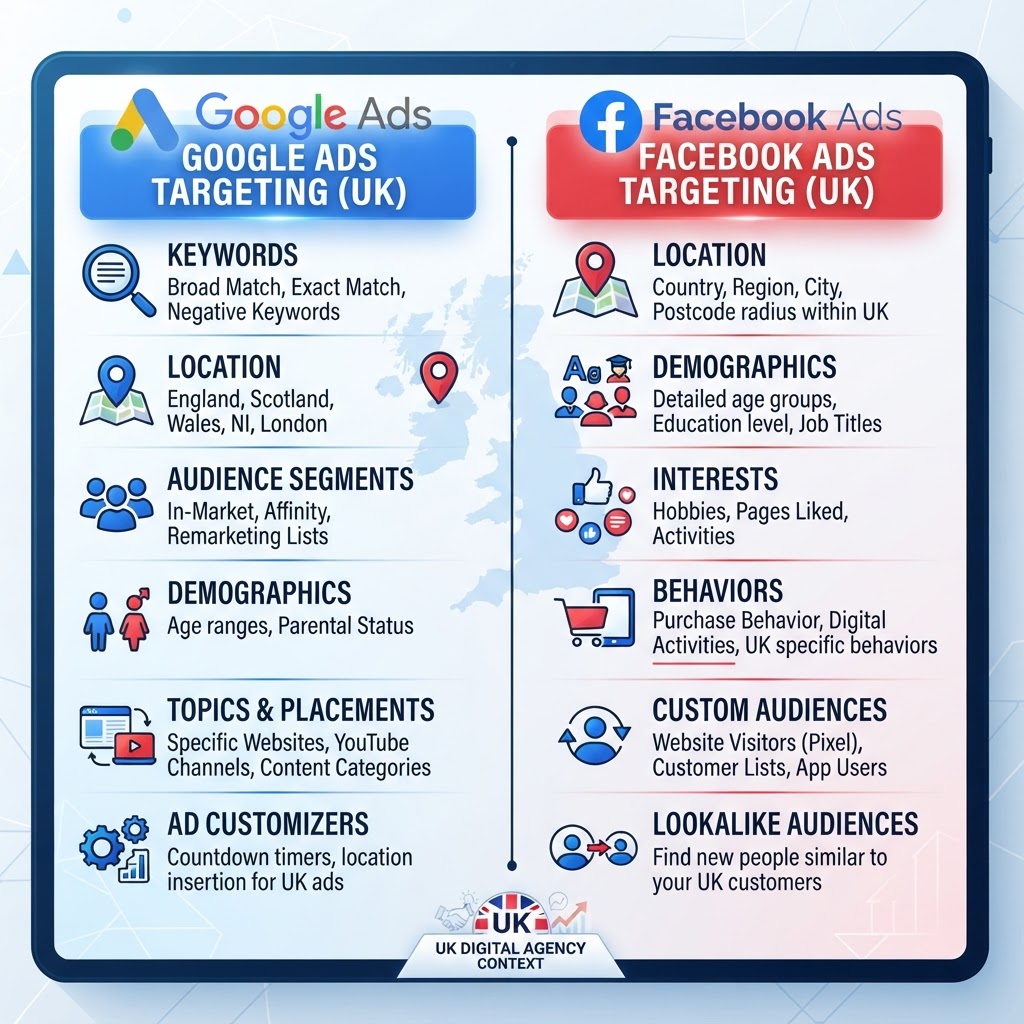
Google allows targeting by keywords, search intent, location, device, time of day, and audience lists (including Customer Match and remarketing). For local businesses in Halifax and Yorkshire, location-based bidding and local campaigns through Google Business Profile integration are particularly valuable.
Facebook Ads Targeting Options
Facebook's targeting depth is unmatched for demographic and psychographic precision. You can target by age, gender, location, job title, income level, interests, behaviours, life events (such as new homeowners or recent movers), and lookalike audiences based on your existing customers. For Yorkshire-based businesses trying to reach a very specific customer profile, this granularity is extremely powerful.
Key Takeaways
- Google Ads delivers higher ROI for service businesses, local trades, and B2B companies because it captures users with active purchase intent.
- Facebook Ads delivers stronger ROI for e-commerce, brand awareness, and lifestyle brands where visual storytelling and demographic targeting matter most.
- Lower CPC on Facebook doesn't automatically mean better ROI — always measure cost per acquisition against customer value.
- Using both platforms together across the marketing funnel consistently outperforms single-channel strategies.
- For UK SMEs with limited budgets, start with Google Ads if you rely on local search, and add Facebook Ads for remarketing once your conversion tracking is in place.
- Regardless of platform, campaign structure, creative quality, and landing page optimisation have a greater impact on ROI than budget size alone.
- Businesses in Halifax, Yorkshire and across the UK should consult a specialist digital agency like STEPS Solutions to build a platform strategy tailored to their specific industry and audience.
The bottom line: there is no universally superior platform. The best ROI comes from matching the right platform to your business objectives, targeting the right audience with the right message, and continuously optimising based on real performance data. If you're unsure where to start, STEPS Solutions offers free digital marketing consultations for UK SMEs looking to make smarter advertising decisions.
Frequently Asked Questions
Which is better for small businesses in the UK — Facebook Ads or Google Ads?
For most UK small businesses, Google Ads is the better starting point if you provide a local service or product that people actively search for, because it captures high-intent buyers at the moment they're ready to purchase. Facebook Ads is more effective for building brand awareness, reaching specific demographic groups, and promoting visually appealing products. Many UK SMEs achieve the best results by using both platforms together, with Google Ads driving conversions and Facebook Ads handling awareness and remarketing.
How much should a UK SME budget for Facebook Ads or Google Ads?
For UK SMEs, a realistic starting budget is £500–£1,000 per month per platform to generate meaningful data and results. Google Ads can deliver results with smaller budgets in lower-competition niches or local markets like Halifax and West Yorkshire. Facebook Ads typically require at least £300–£500 per month to allow the algorithm enough data to optimise delivery. Both platforms have no minimum spend, but insufficient budgets limit the algorithm's ability to learn and optimise effectively.
What is the average ROI for Facebook Ads and Google Ads in the UK?
Average ROI varies significantly by industry, campaign quality, and business model. Google Ads delivers an average return of £2–£8 for every £1 spent across UK industries, with well-optimised campaigns in competitive sectors achieving higher returns. Facebook Ads typically deliver £1.50–£4 for every £1 spent on average, but e-commerce brands with strong creative and retargeting strategies often achieve significantly higher returns. These figures depend heavily on campaign management quality, landing page experience, and offer relevance.
Can I run Facebook Ads and Google Ads at the same time?
Yes, and for most UK businesses this is the recommended approach. Running both platforms simultaneously allows you to cover different stages of the customer journey — using Facebook Ads to build awareness and retarget visitors, while Google Ads captures people actively searching for your product or service. When integrated with a coherent tracking strategy (such as Google Analytics 4 and Meta Pixel), the two platforms complement each other and typically reduce overall cost per acquisition compared to using either platform alone.
How long does it take to see results from Facebook Ads or Google Ads?
Google Ads can generate clicks and leads within hours of a campaign going live, making it faster for immediate lead generation. However, meaningful performance data typically takes 2–4 weeks to accumulate. Facebook Ads enter a "learning phase" of approximately 7–14 days during which the algorithm optimises delivery, so results often improve significantly after the first two weeks. For both platforms, campaigns typically reach peak efficiency after 60–90 days of consistent optimisation by an experienced digital marketing team.