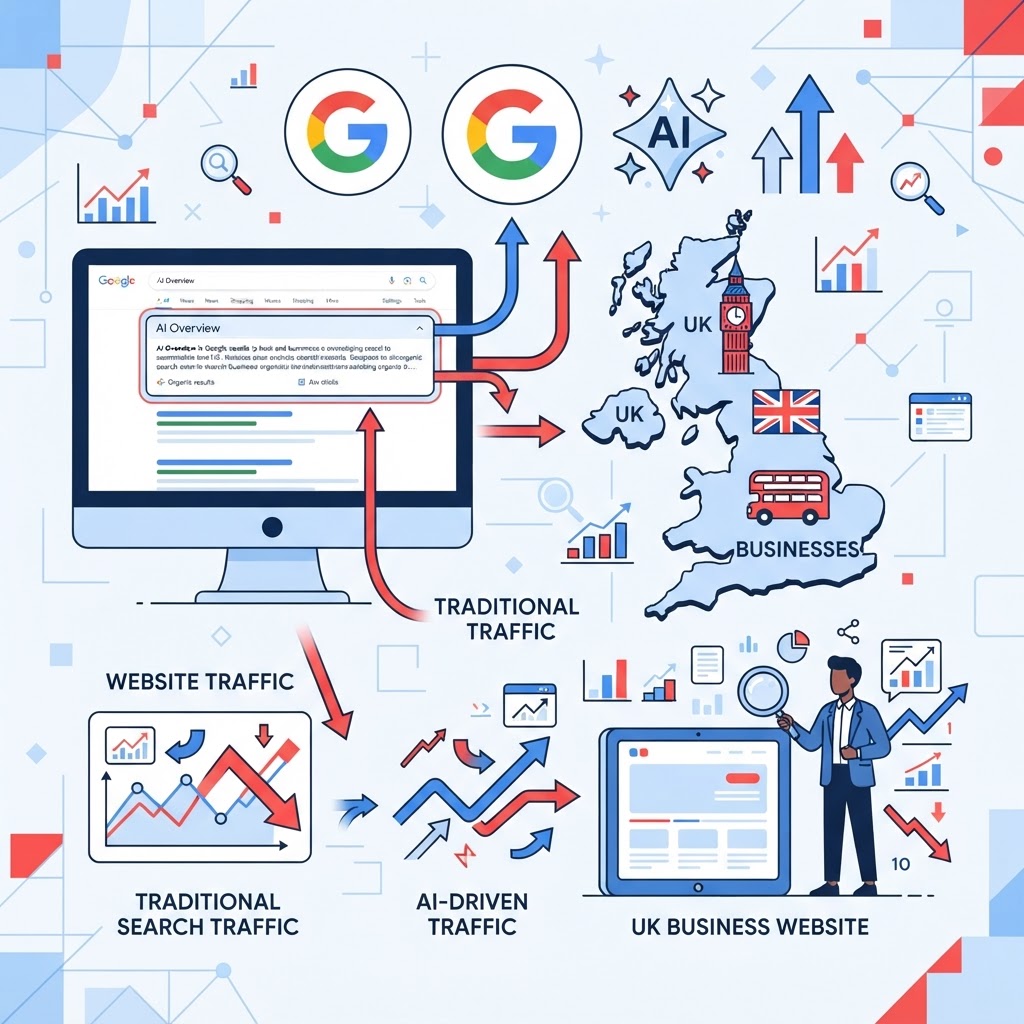
Google's AI Overview — formerly known as Search Generative Experience (SGE) — is now rolling out to UK users, and it's already changing how people interact with search results. If you run a business website in the UK, whether you're a retailer in Halifax, a solicitor in Leeds, or a tradesperson serving clients across Yorkshire, this shift affects how visible you are online and how much organic traffic lands on your site. Understanding what AI Overview actually is, how it works, and what you can do about it isn't optional anymore — it's essential.
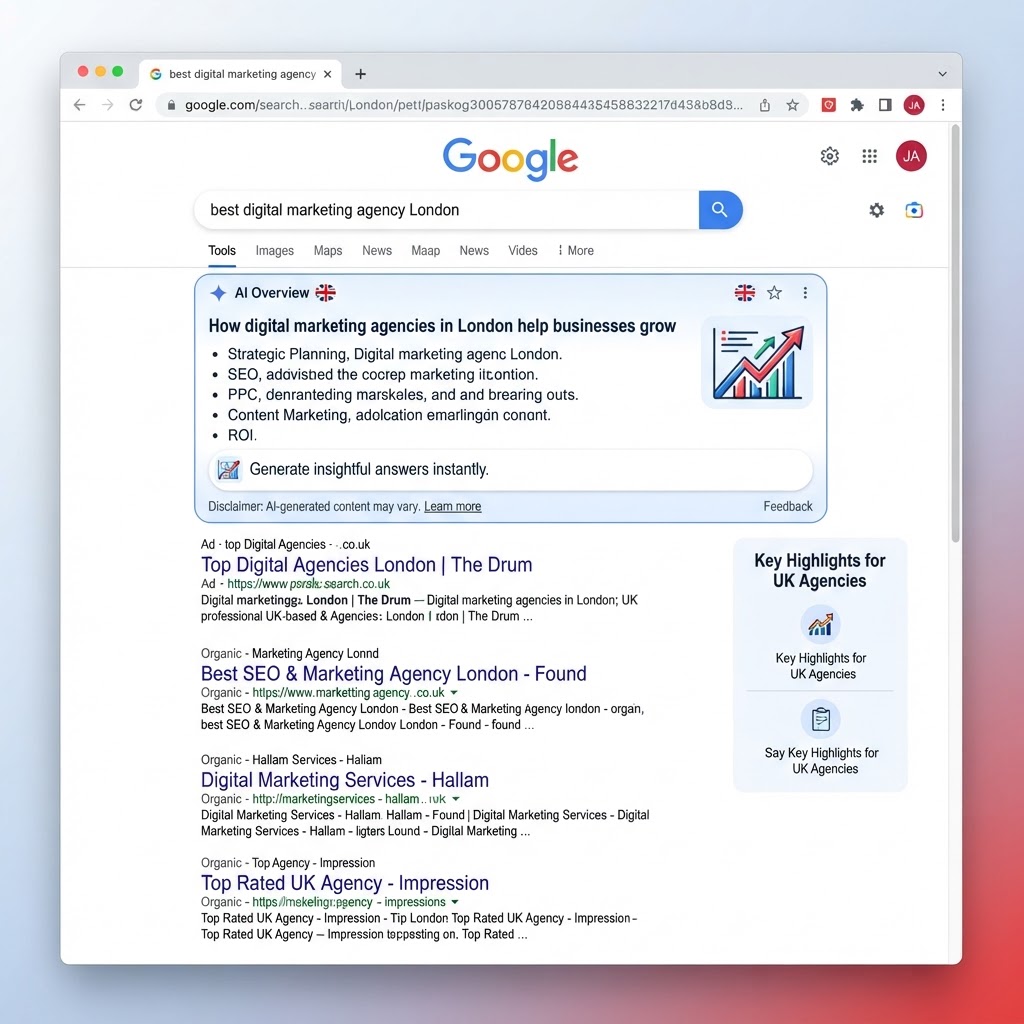
What Is Google's AI Overview?
Google's AI Overview is an AI-generated summary that appears at the very top of certain search results pages, above the traditional "ten blue links." Powered by Google's Gemini AI model, it synthesises information from multiple web sources and presents a direct answer to the user's query — without requiring them to click through to any individual website.
AI Overview is triggered most often by informational queries: questions like "how do I register a business in the UK," "what is a leasehold property," or "best ways to improve local SEO." For these query types, Google now attempts to answer the question entirely within the search result itself.
How Is AI Overview Different from Featured Snippets?
Featured snippets pull a single excerpt from one webpage. AI Overview is more ambitious — it synthesises content from several sources, generates a structured answer, and then links to a small selection of cited pages. Think of it as a research assistant summarising multiple articles, not just quoting one. The implications for website traffic are therefore more significant and more complex than featured snippets ever were.
How AI Overview Is Affecting UK Website Traffic
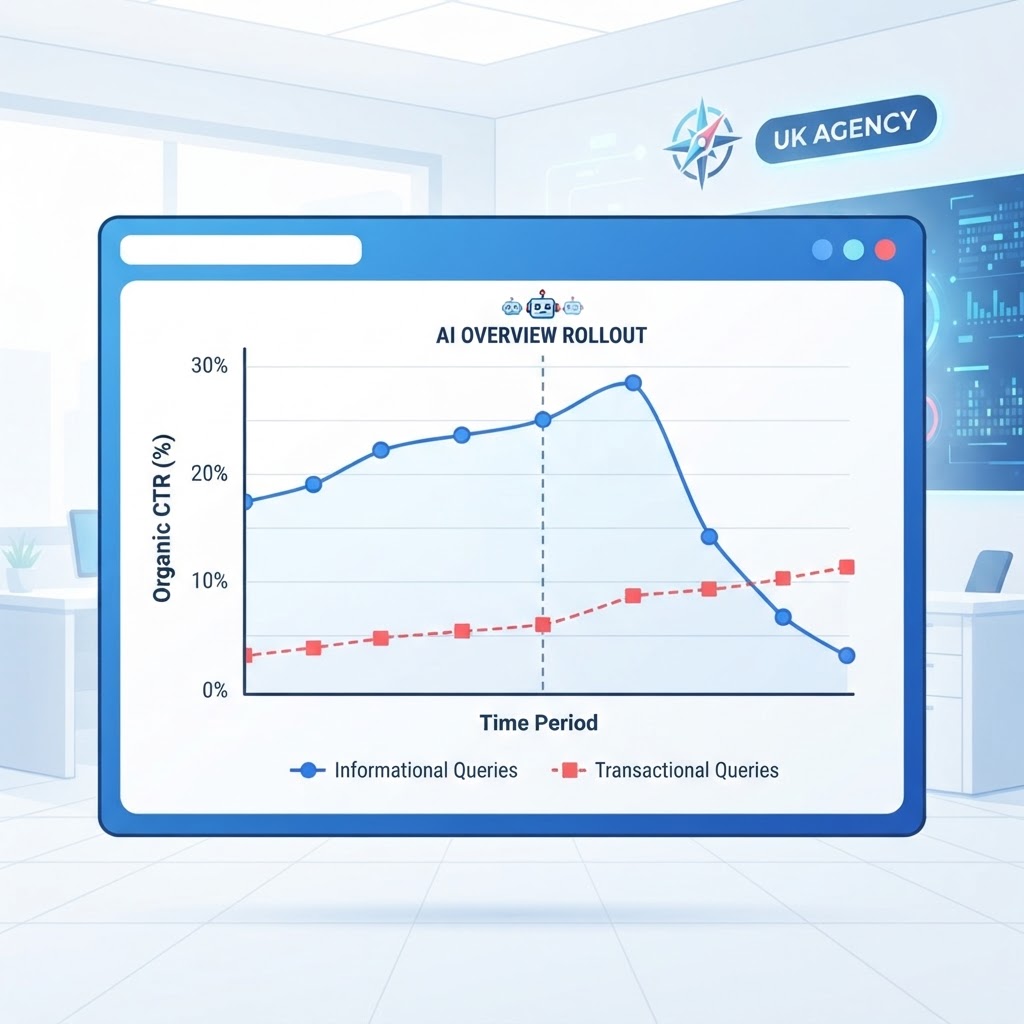
The honest answer is: it depends on your industry, your query type, and how well your content is structured. Early data from the US rollout — where AI Overview launched first — showed meaningful traffic declines for some informational content publishers. UK businesses are now entering the same landscape.
"Sites that saw the biggest traffic drops after AI Overview appeared were those whose primary value was answering simple questions. Sites offering genuine depth, original expertise, and transactional value held up far better." — Analysis widely reported by SEO researchers including data from BrightEdge and Semrush, 2024
Here's what the data and early evidence suggests for UK businesses:
- Informational blog content targeting simple questions is most at risk of reduced click-through rates
- Local and transactional queries ("web design agency in Halifax," "plumber near me") are less affected because AI Overview rarely replaces local intent searches
- Commercial and product pages are largely insulated — users still need to visit a site to buy or enquire
- Sites cited within AI Overview can see increased brand visibility and qualified referral traffic
- E-A-T-poor content — thin, generic, or unoriginal pages — faces the steepest decline
What Does This Mean for Local UK Businesses Specifically?
At STEPS Solutions, we work with businesses across Halifax, Yorkshire, and the wider UK, and the question we're hearing most often right now is: "Is Google going to kill our organic traffic?" The short answer is no — but it will change where that traffic comes from and which pages earn it.
Local SEO remains highly resilient. Queries with geographic intent — "accountant in Huddersfield," "best café in Halifax town centre" — still trigger the local pack and map results rather than AI Overview summaries. Google understands that users asking local questions want local businesses, not a generic AI answer.
However, local businesses that rely on informational blog content to attract top-of-funnel visitors do need to reassess their content strategy. The goal is no longer simply to rank — it's to be the source that AI Overview cites, or to create content that delivers value AI simply cannot replicate.
The Opportunity Hidden in AI Overview
Being cited inside an AI Overview puts your brand name and website in front of users at the exact moment they're forming an opinion. Even if they don't click immediately, brand recall improves. For UK businesses investing in thought leadership and authoritative content, this is a genuine opportunity — not just a threat.
How to Optimise Your Website for Google's AI Overview
Optimising for AI Overview requires a blend of traditional SEO best practice and newer Generative Engine Optimisation (GEO) techniques. Here's what actually works:
- Structure your content with clear questions and direct answers. AI models look for content that directly addresses a query. Use
H2andH3headings that mirror the questions your audience asks, followed immediately by a concise, factual answer. - Demonstrate genuine expertise (E-E-A-T). Google's systems favour content from credible sources. Include author credentials, cite data, reference real experience. Generic AI-generated content is at the back of the queue.
- Use structured data markup. Schema.org markup — particularly FAQ schema, HowTo schema, and Article schema — helps Google understand your content's structure and increases citation likelihood.
- Build topical authority, not just individual pages. A cluster of well-linked, in-depth pages on a subject signals that your site is a reliable source on that topic.
- Prioritise local and transactional pages. These are the pages least disrupted by AI Overview. Ensure your service pages, location pages, and conversion-focused content are technically sound and well-optimised.
- Earn quality backlinks and brand mentions. AI systems are more likely to cite sources that the wider web already treats as authoritative. Off-page SEO still matters enormously.
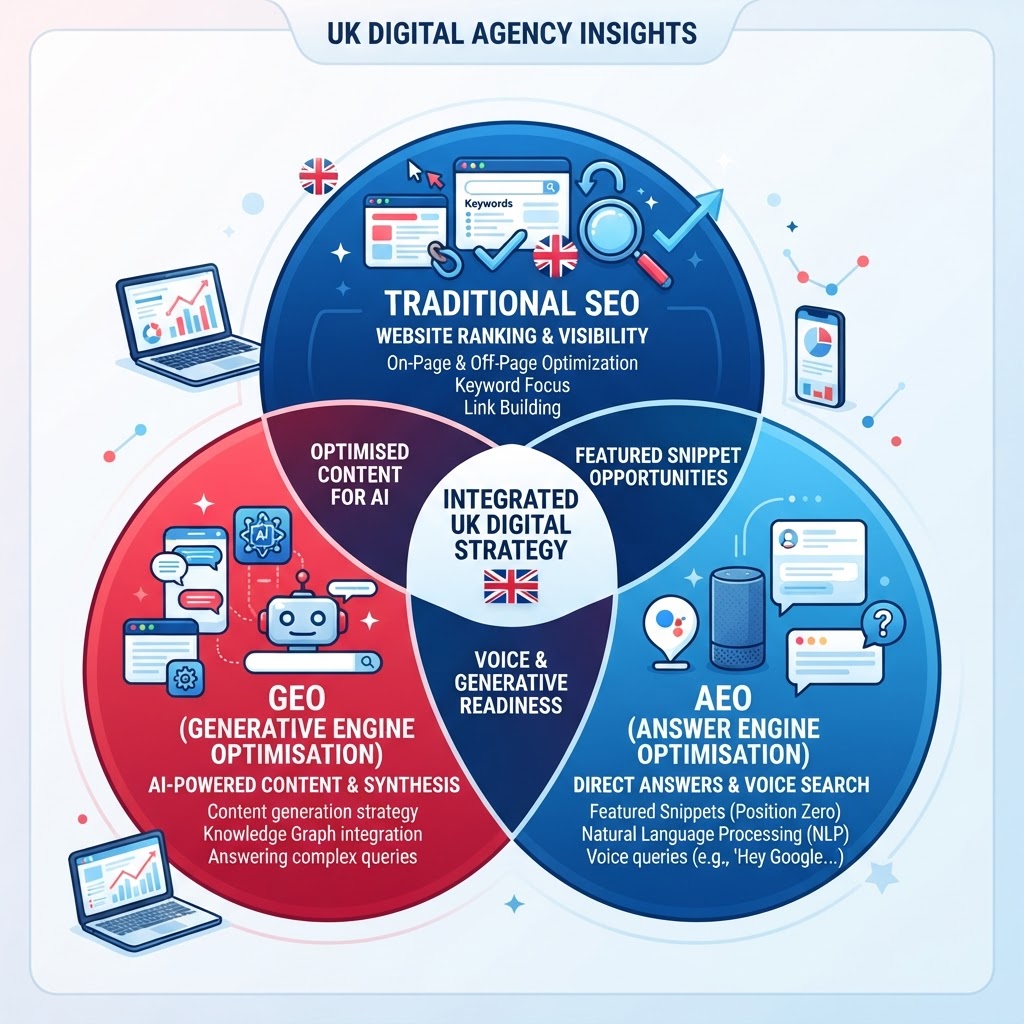
The Broader Shift: SEO, GEO, and AEO in 2025
Google's AI Overview is part of a larger transition in how people discover information online. Search is splitting into two distinct channels:
- Answer engines (Google AI Overview, ChatGPT, Perplexity, Microsoft Copilot) — where users want a direct, synthesised answer
- Destination engines (traditional organic search, social discovery) — where users want to visit a specific website or resource
Winning in this environment means being present in both. Answer Engine Optimisation (AEO) is the discipline of structuring your content so that AI assistants not only find it but cite it confidently. This means writing clearly, formatting logically, stating facts explicitly, and building the kind of brand authority that signals trustworthiness to both human readers and machine models.
At STEPS Solutions in Halifax, we've been advising Yorkshire businesses to think about their content not just as material for ranking on Google, but as a knowledge base that AI systems will increasingly draw from. The businesses that invest in quality, structured, expert content now will be far better positioned as this transition accelerates through 2025 and beyond.
Key Takeaways
- Google AI Overview is now live for UK users and generates AI-written summaries at the top of search results for many queries
- Informational content faces the greatest risk of reduced click-through rates; transactional and local content is more resilient
- Local SEO for UK businesses — including local pack rankings and Google Business Profile — remains largely unaffected by AI Overview
- Being cited within AI Overview can increase brand visibility even when direct clicks don't occur
- Optimising for AI visibility requires clear question-and-answer formatting, strong E-E-A-T signals, and structured data markup
- The future of digital visibility combines traditional SEO with GEO (Generative Engine Optimisation) and AEO (Answer Engine Optimisation)
- Businesses that build genuine topical authority and expert content will outperform those relying on thin or generic pages
Frequently Asked Questions
What is Google AI Overview and is it available in the UK?
Google AI Overview is an AI-generated answer summary that appears at the top of Google search results for certain queries, powered by Google's Gemini AI model. It was initially launched in the United States in May 2024 and began rolling out to UK users later in 2024. It is now increasingly visible to UK searchers across a broad range of informational query types.
Will Google AI Overview reduce traffic to my UK business website?
It depends on the type of content your site publishes. Pages targeting simple informational queries may see reduced click-through rates, as Google AI Overview can answer those questions directly in the search results. However, local service pages, product pages, and transactional content are far less affected. Businesses with strong local SEO and conversion-focused pages are unlikely to see significant traffic loss from AI Overview.
How can I get my website cited in Google AI Overview?
To increase the likelihood of being cited in Google AI Overview, structure your content with clear headings that reflect user questions and provide direct, factual answers immediately beneath them. Implement structured data markup such as FAQ schema and Article schema. Demonstrate E-E-A-T (Experience, Expertise, Authoritativeness, and Trustworthiness) through credible authorship, cited sources, and original insight. Earning quality backlinks and building topical authority on your subject area also significantly improves citation likelihood.
Does local SEO still work with Google AI Overview in place?
Yes. Local SEO remains highly effective and is largely insulated from the disruption caused by Google AI Overview. Searches with clear geographic intent — such as "solicitor in Halifax" or "web design agency Yorkshire" — continue to trigger local pack results, Google Maps listings, and traditional organic results rather than AI-generated summaries. Maintaining and optimising your Google Business Profile and building local citations remains one of the most reliable visibility strategies for UK businesses.
What is the difference between SEO, GEO, and AEO?
SEO (Search Engine Optimisation) focuses on ranking web pages in traditional search engine results. GEO (Generative Engine Optimisation) is the practice of structuring and presenting content so that AI-powered search tools and large language models cite or surface it in generated answers. AEO (Answer Engine Optimisation) specifically targets AI assistants and voice search tools that provide direct answers to questions, such as Google Assistant, Siri, or ChatGPT. In 2025, a comprehensive digital strategy for UK businesses should address all three disciplines together.