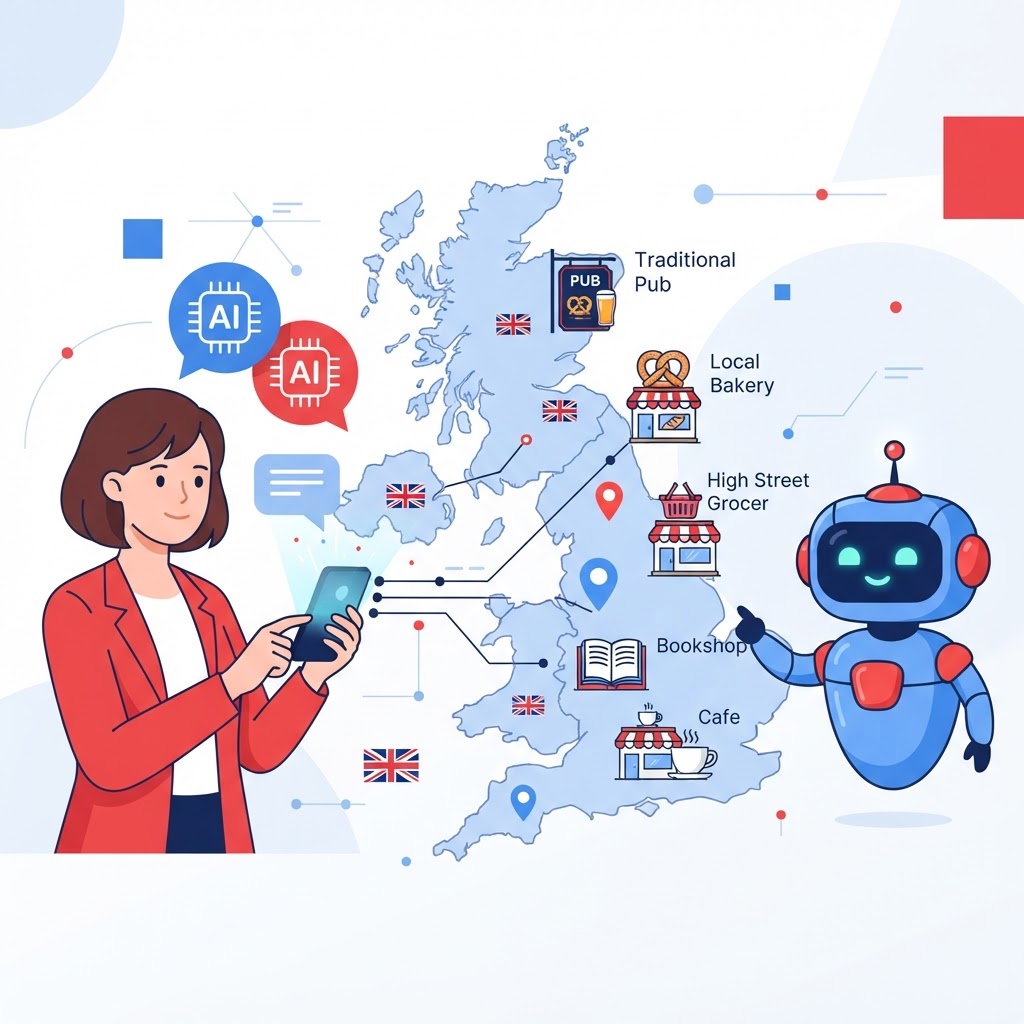
The way UK consumers discover local businesses is undergoing a fundamental shift. Where people once typed keywords into Google and scrolled through a list of blue links, millions are now asking AI assistants like ChatGPT, Google Gemini, and Microsoft Copilot direct questions — and expecting direct answers. For small and medium-sized businesses across the UK, from independent retailers in Halifax to service providers across Yorkshire, this change is not on the horizon. It is already here. Understanding how AI-driven search works, and how to position your business to be found through it, is quickly becoming one of the most important aspects of modern digital marketing.
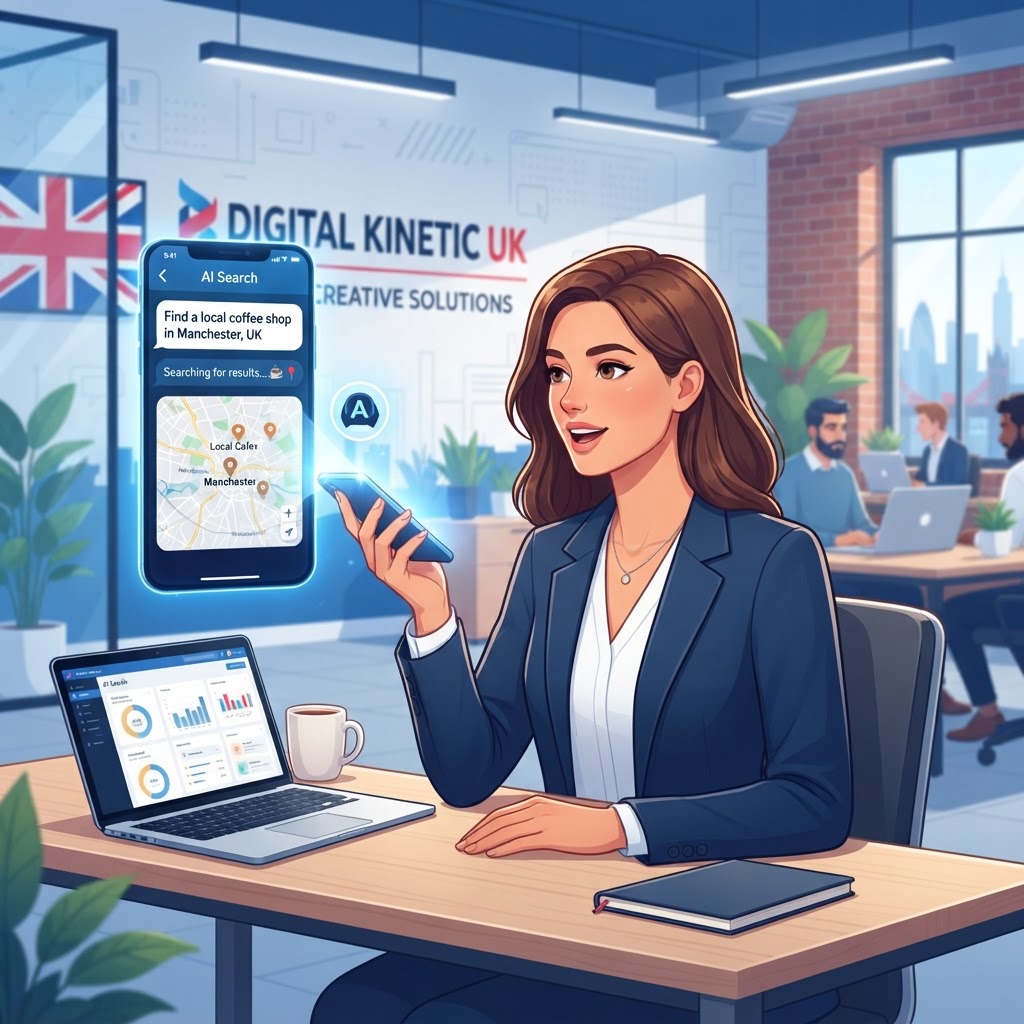
What Is Changing About How People Search for Local Businesses?
Traditional search engines operate on a keyword-match model: a user types "plumber Halifax" and receives a ranked list of results. AI assistants operate differently. They interpret natural language, understand context, and synthesise information from multiple sources to deliver a single, conversational answer. Instead of presenting ten options, an AI might say: "Based on your location, here are two highly rated plumbers in Halifax with availability this week."
This shift has profound implications for local businesses. The competition is no longer just about ranking on page one — it is about being the business an AI recommends when a consumer asks a natural-language question.
The Rise of Conversational Search Queries
AI tools are trained on and optimised for conversational, intent-driven language. UK consumers are increasingly using queries such as:
- "What is the best web design agency near me in West Yorkshire?"
- "Which local SEO company in Halifax comes highly recommended?"
- "Find me a reliable digital marketing agency in Yorkshire that works with small businesses."
- "Who does social media management for small businesses in Halifax?"
These are not keyword strings — they are questions. Businesses that have structured their online presence to answer these questions directly are significantly more likely to be surfaced by AI models.
How AI Assistants Decide Which Local Businesses to Recommend
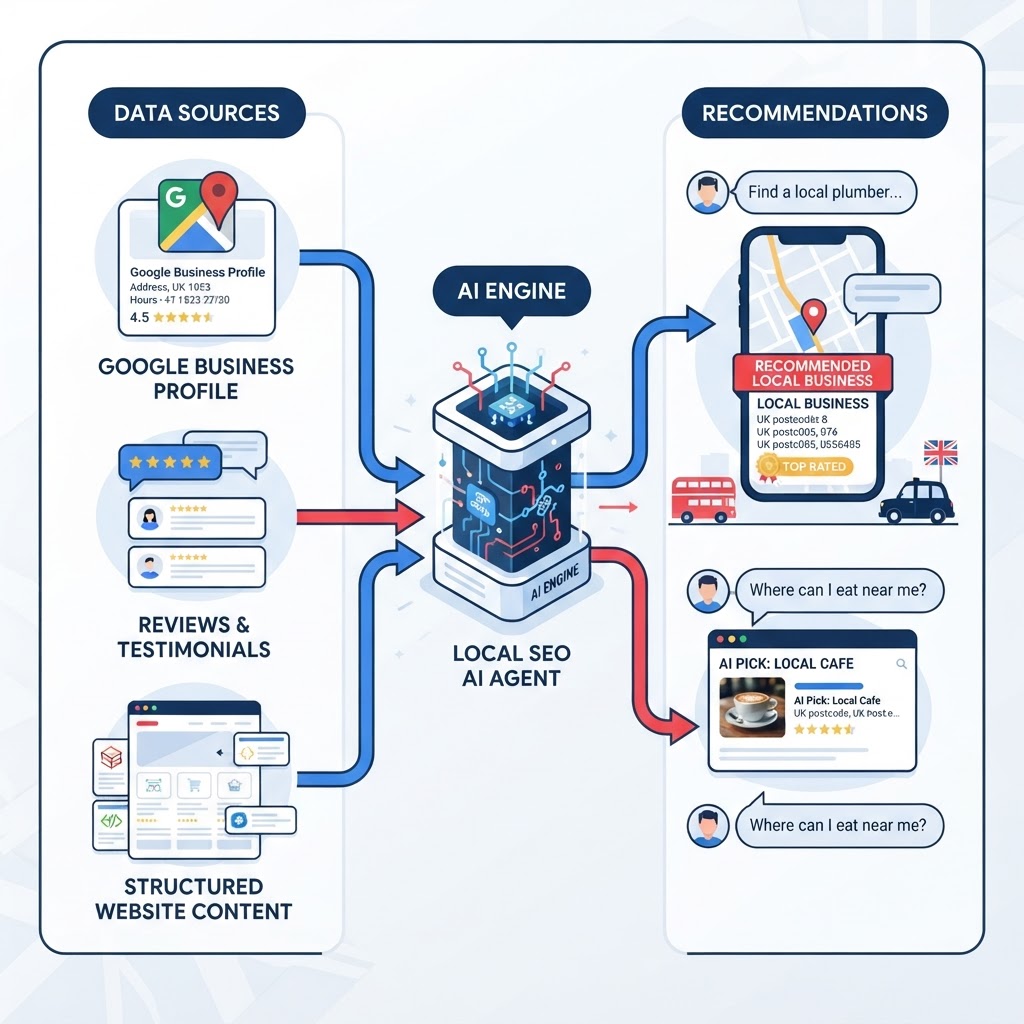
Understanding the mechanics behind AI recommendations is essential for any UK business owner serious about visibility. AI language models like ChatGPT do not crawl the web in real time in the same way Google does. Instead, they draw on a combination of trained knowledge, real-time web browsing (in some versions), and structured data sources including Google Business Profile, business directories, review platforms, and authoritative web content.
Key Signals AI Models Use to Identify Local Businesses
- Google Business Profile completeness — A fully optimised GBP listing with accurate NAP (Name, Address, Phone), categories, opening hours, and regular posts signals legitimacy to both Google and AI tools that reference Google data.
- Online reviews and ratings — AI assistants frequently reference review volumes and average ratings from Google, Trustpilot, and Yelp when forming recommendations.
- Consistent business citations — Listings on directories such as Yell, Bing Places, and industry-specific platforms help AI models verify that a business is real, established, and locally relevant.
- Clear, structured website content — Pages that answer specific questions in plain English, use proper heading hierarchies, and include location-specific information are far more likely to be parsed and cited by AI systems.
- Authoritative backlinks and mentions — When local news sites, industry blogs, or trusted organisations mention your business, AI models treat this as a credibility signal.
What Is GEO and Why Does It Matter for UK Local Businesses?
Generative Engine Optimisation (GEO) is the practice of structuring and presenting online content in a way that makes it more likely to be cited, summarised, or recommended by AI-powered generative search engines. It sits alongside traditional SEO but focuses specifically on how large language models interpret and use information.
At STEPS Solutions, based in Halifax, West Yorkshire, we work with businesses across Yorkshire and beyond to implement GEO strategies that go beyond keyword rankings and position brands as the authoritative answer to the questions their customers are asking AI tools.
"By 2026, it is estimated that AI-driven search tools will influence more than 30% of all online discovery interactions. For local businesses, failing to optimise for generative AI is the equivalent of ignoring Google in 2005."
Practical GEO Strategies for Local Businesses
To improve your visibility in AI-generated responses, UK businesses should focus on the following:
- Write website content in a clear, question-and-answer format that directly addresses what your customers ask
- Include your town, region, and service area naturally throughout your content — terms like Halifax, West Yorkshire, and Yorkshire help AI models associate your business with specific locations
- Add structured data markup (Schema.org) to your website so search engines and AI tools can easily extract key business information
- Publish regular, factual, helpful content — blog posts, guides, and FAQs that AI models can draw from when answering user queries
- Maintain consistent and accurate business information across every online platform
The Role of Local SEO in an AI-First Search World
Local SEO remains the foundation of AI visibility for geographically targeted businesses. The businesses that AI tools recommend are overwhelmingly those that have invested in robust local SEO practices. This means that the fundamentals have not changed — they have simply become more important.
For businesses in Halifax and across Yorkshire, a strong local SEO strategy should include a fully optimised Google Business Profile, a location-specific website with dedicated service area pages, an active review generation strategy, and high-quality local backlinks from trusted Yorkshire-based websites and directories.
What has changed is the urgency. AI tools are compressing the discovery funnel. A consumer who previously might have visited three or four websites before making a decision may now act directly on an AI recommendation. That means the business that is recommended first — and recommended confidently — captures a disproportionate share of customer intent.
What UK Businesses Should Do Right Now
The businesses best positioned for AI-driven discovery in 2025 and beyond are those taking a proactive approach today. Here is where to start:
- Audit your Google Business Profile — Ensure every field is complete, your categories are accurate, and you are posting updates regularly.
- Review your website structure — Does your site clearly communicate what you do, where you operate, and why customers should choose you? AI models need to be able to extract this information easily.
- Build a review strategy — Actively ask satisfied customers to leave reviews on Google and other relevant platforms. AI tools weight social proof heavily.
- Create structured, helpful content — Publish FAQ pages, how-to guides, and location-specific content that answers real questions your customers are typing — and speaking — into AI tools.
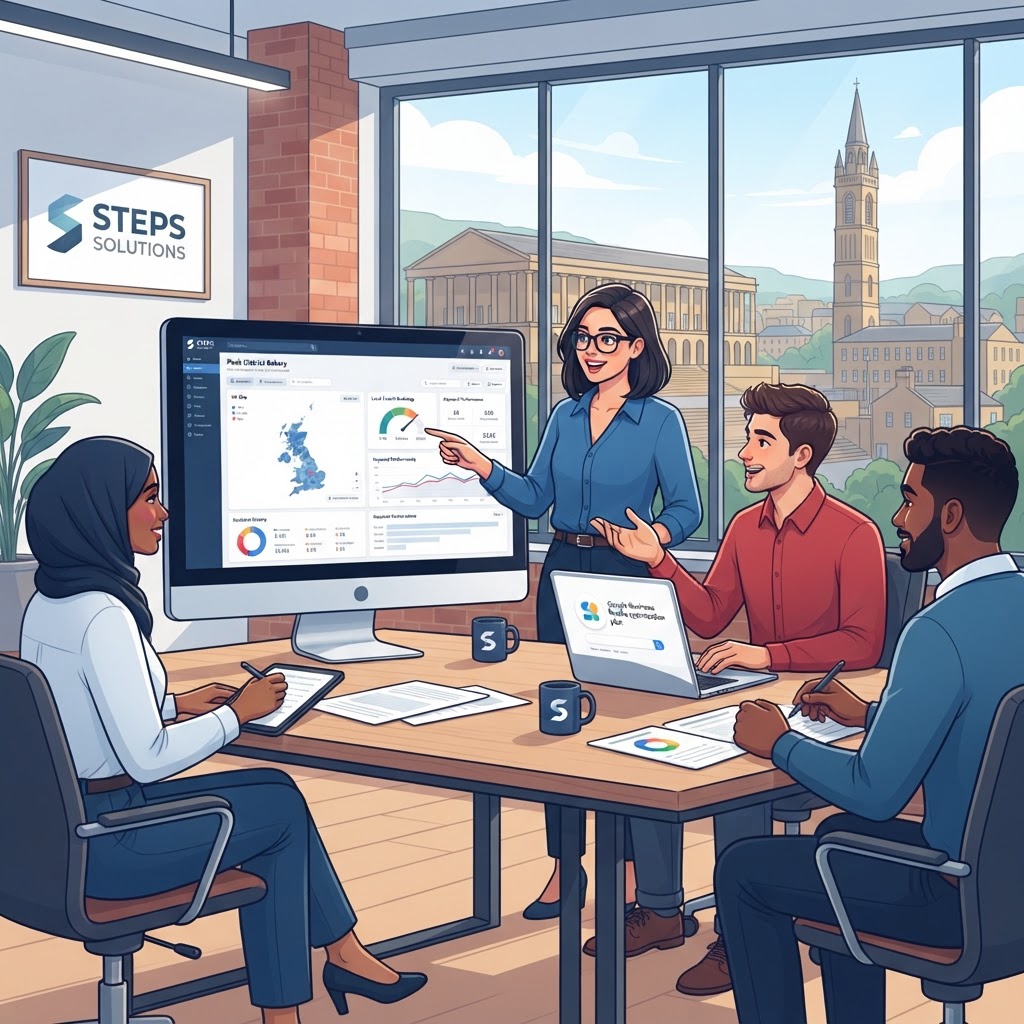
- Work with a digital agency that understands GEO — Emerging disciplines like Generative Engine Optimisation and Answer Engine Optimisation require specialist knowledge. STEPS Solutions in Halifax helps Yorkshire businesses navigate this evolving landscape with practical, results-driven strategies.
Key Takeaways
- AI assistants like ChatGPT, Gemini, and Copilot are changing how UK consumers find and choose local businesses.
- AI tools favour businesses with complete Google Business Profiles, strong reviews, consistent citations, and well-structured website content.
- Generative Engine Optimisation (GEO) is the practice of making your content AI-citation-ready — and it is now an essential part of digital marketing.
- Local SEO remains the foundation; AI-first search makes it more important, not less.
- Businesses in Halifax, Yorkshire, and across the UK that act now will gain a significant competitive advantage as AI-driven search continues to grow.
- STEPS Solutions offers specialist local SEO, GEO, and digital marketing services to help UK businesses get found in an AI-first world.
Frequently Asked Questions
How does ChatGPT decide which local businesses to recommend?
ChatGPT and similar AI assistants draw on a combination of trained data, web browsing capabilities, and structured sources such as Google Business Profile, online directories, and review platforms. Businesses with complete, consistent, and well-reviewed online profiles are significantly more likely to be recommended. Clear, factual website content that answers specific questions also increases the likelihood of being cited by AI tools.
What is Generative Engine Optimisation (GEO) and how is it different from SEO?
Generative Engine Optimisation (GEO) is the practice of structuring online content so that AI-powered generative search engines — such as ChatGPT, Google AI Overviews, and Microsoft Copilot — are more likely to cite, summarise, or recommend your business. Traditional SEO focuses on ranking in keyword-based search results, while GEO focuses on being the authoritative, trusted source that AI models reference when answering natural language queries. Both disciplines are complementary and essential for modern digital visibility.
How can a small UK business improve its visibility in AI search results?
Small UK businesses can improve their AI search visibility by fully completing and regularly updating their Google Business Profile, building a strong base of genuine customer reviews, maintaining consistent business information across all online directories, and publishing structured, question-led content on their website. Using Schema.org markup to help AI tools extract key business data is also highly effective. Working with a local SEO specialist, such as STEPS Solutions in Halifax, can accelerate results significantly.
Is local SEO still important now that people use AI assistants to search?
Yes — local SEO is more important than ever. AI assistants rely heavily on the same signals that power local SEO: Google Business Profile data, online reviews, business citations, and location-specific website content. The difference is that AI tools compress the customer journey, making the first recommendation carry more weight than it did in traditional search. A strong local SEO foundation is the prerequisite for AI visibility.
How can a digital agency in Halifax help my business get found by AI assistants?
A specialist digital agency like STEPS Solutions in Halifax, West Yorkshire, can conduct a full audit of your current online presence, identify gaps in your local SEO and GEO strategy, optimise your Google Business Profile and website structure, build relevant citations and backlinks, and create AI-citation-ready content. With expertise in local SEO, GEO, and digital marketing for UK businesses, STEPS Solutions helps clients across Yorkshire and beyond achieve measurable visibility in both traditional and AI-driven search.