
Artificial intelligence search tools like ChatGPT, Claude, and Google Gemini are rapidly changing how people find businesses, services, and answers online. Instead of clicking through a list of blue links, millions of users now ask an AI assistant directly — and the AI either mentions your business or it doesn't. For UK businesses, particularly those in competitive local markets like Halifax and across Yorkshire, this shift represents both a significant threat and a major opportunity. This guide explains exactly what LLM SEO is, why it matters, and the practical steps you can take to get your business cited, referenced, and recommended by large language models.
What Is LLM SEO and Why Does It Matter for UK Businesses?
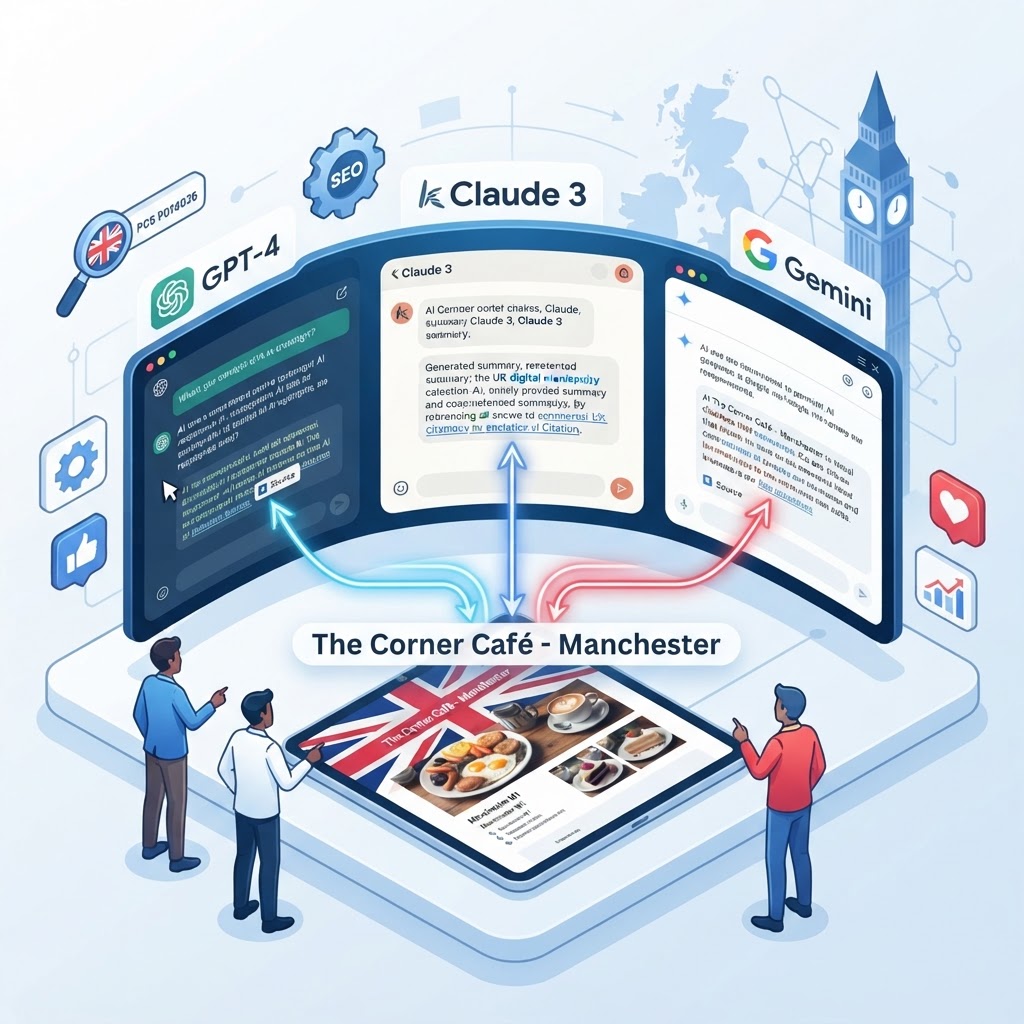
LLM SEO (Large Language Model SEO) is the practice of optimising your online presence so that AI-powered tools — including ChatGPT, Claude, Gemini, Perplexity, and Microsoft Copilot — recognise your business as a credible, authoritative source and include it in generated responses. It sits alongside GEO (Generative Engine Optimisation) and AEO (Answer Engine Optimisation) as part of an emerging discipline that goes beyond traditional search engine rankings.
Traditional SEO gets you ranked on Google. LLM SEO gets you mentioned when someone asks an AI: "What's the best digital marketing agency in Yorkshire?" or "Who can help my small business with local SEO in Halifax?" These are exactly the questions potential customers are asking right now — and if your business isn't in the training data, cited sources, or trusted web content that AI models draw from, you're invisible to an entire category of search behaviour.
"By 2026, an estimated 30% of all search queries will be handled without a traditional search engine. Businesses that fail to optimise for AI-generated answers risk losing significant organic visibility." — Gartner Research, 2024
How Do AI Models Like ChatGPT and Gemini Decide What to Mention?
Understanding how LLMs select and cite information is the foundation of any effective LLM SEO strategy. These models are not performing live searches in the traditional sense — they draw on vast training datasets, real-time retrieval (in some cases), and signals of authority, trustworthiness, and relevance.
Training Data and Web Crawling
Models like GPT-4 and Claude are trained on enormous snapshots of the web. If your business is consistently mentioned on reputable, high-authority websites — trade directories, news sites, review platforms, and well-regarded blogs — you are more likely to appear in that training data. This means your off-page SEO footprint directly influences your LLM visibility.
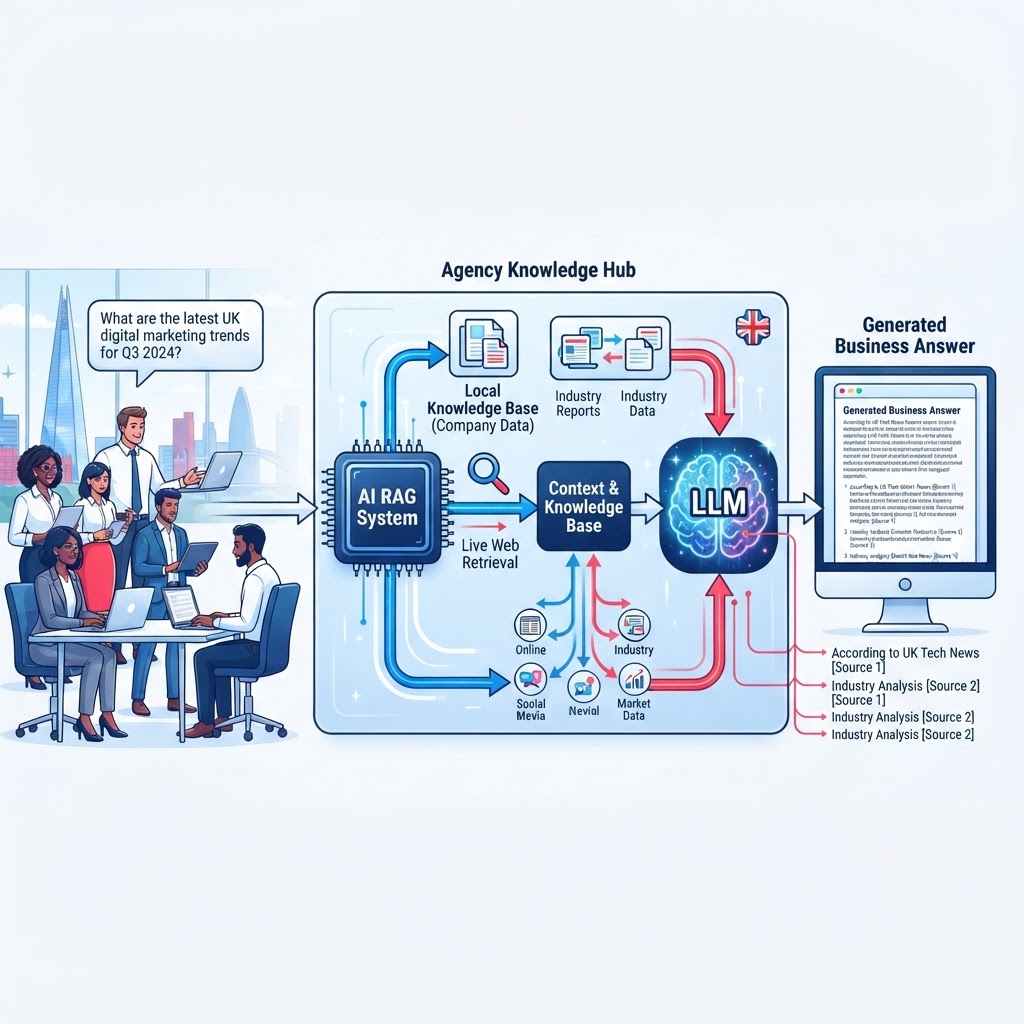
Retrieval-Augmented Generation (RAG)
Many modern AI tools now use RAG — they retrieve live web content to supplement their responses. Gemini, Perplexity, and the Bing-powered version of ChatGPT all pull from current web pages. This means your website content, structured data, and freshness of information matter enormously for AI citation in real time.
Entity Recognition and Brand Mentions
AI models identify named entities — businesses, people, locations, products. The more consistently your business name, location, and services appear together across the web in structured, factual contexts, the more confidently an AI model can identify and recommend you. For a business like STEPS Solutions in Halifax, West Yorkshire, this means ensuring every online mention reinforces the same core facts.
Six Proven Strategies to Get Your Business Mentioned by AI
These are the core tactics that STEPS Solutions recommends to UK businesses looking to build visibility across generative AI platforms.
1. Create Structured, Factual, Answer-First Content
AI models favour content that directly answers specific questions. Use a clear question-and-answer format, lead with your answer before expanding, and avoid burying key facts in verbose paragraphs. Think about every piece of content as a potential source for an AI response. Blog posts, service pages, and FAQs should all be written with this in mind.
2. Build a Strong Local Citation Profile
For local businesses across Yorkshire and the wider UK, consistent citations on platforms like Google Business Profile, Bing Places, Yelp, Yell.com, Trustpilot, and industry-specific directories are critical. AI models cross-reference these sources to verify business legitimacy. Ensure your NAP (Name, Address, Phone number) is identical across every platform.
3. Earn Mentions on High-Authority Websites
A mention of your business on a regional news site, a respected industry blog, or a government-linked directory carries enormous weight. Pursue:
- Press releases distributed to local Yorkshire media outlets
- Guest posts on authoritative industry websites
- Inclusion in curated lists and roundups (e.g., "Best SEO agencies in Yorkshire")
- Partnerships and co-mentions with established local businesses
- Charity sponsorships or community involvement that generates legitimate press coverage
4. Implement Structured Data (Schema Markup)
Add Schema.org structured data to your website. At minimum, implement LocalBusiness, Organization, FAQPage, and Review schema. This makes your business information machine-readable — AI crawlers and retrieval systems can extract and verify your details far more reliably. This is a non-negotiable technical SEO step for any business serious about LLM visibility.
5. Generate and Respond to Reviews Consistently
Reviews are a proxy for trustworthiness. AI models trained on web data absorb review sentiment and star ratings as signals of business quality. Actively encourage satisfied customers to leave detailed, keyword-rich reviews on Google, Trustpilot, and relevant industry platforms. Respond professionally to all reviews — this signals an active, credible business.
6. Optimise Your Google Business Profile for AI Retrieval
Your Google Business Profile is one of the most direct feeds into Google Gemini's local knowledge. Ensure yours includes:
- A complete, keyword-optimised business description
- Accurate and comprehensive service and product listings
- Regular posts and updates (at least twice per month)
- High-quality photos with descriptive file names and alt text
- Answers to all questions in the Q&A section
Content Formats That AI Models Love to Cite
Not all content is equally useful to an LLM. Based on how these models process and retrieve information, certain formats consistently outperform others for AI citation.
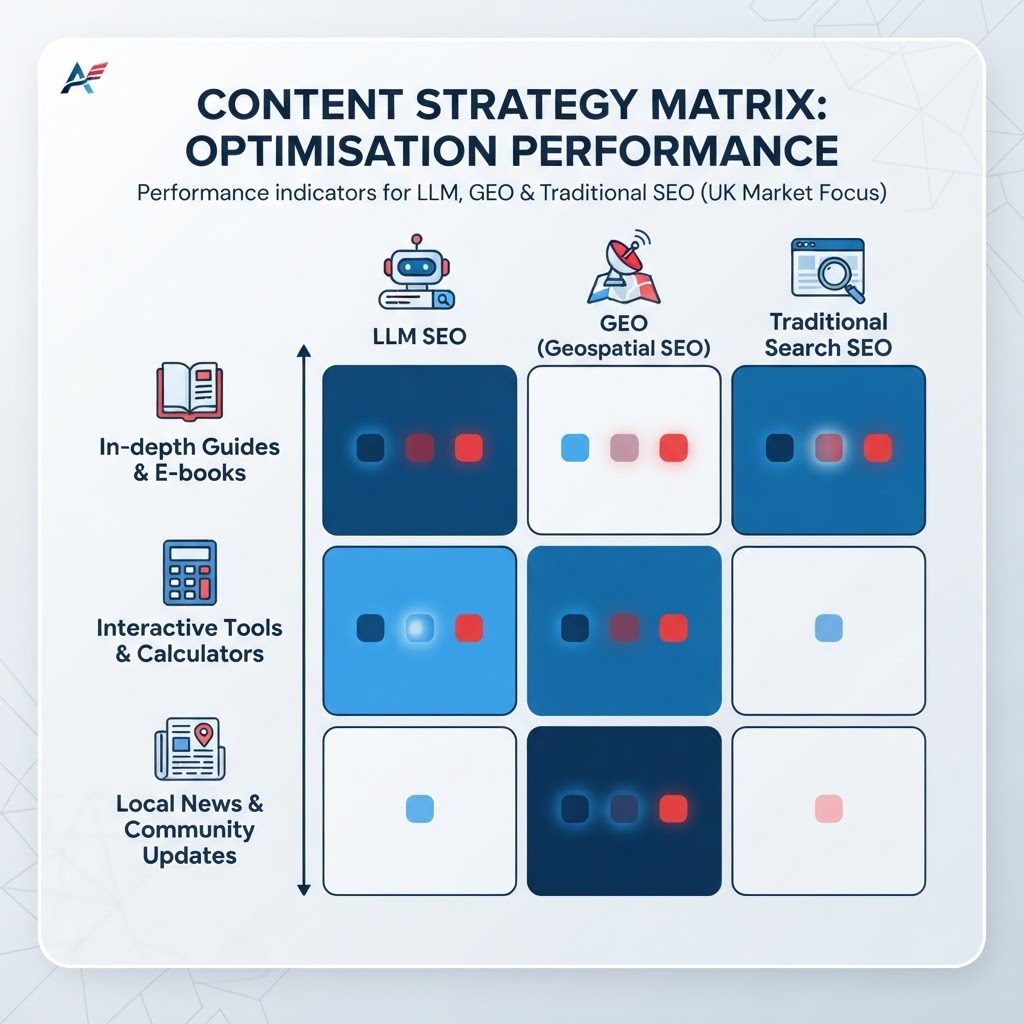
Definitive guides that comprehensively cover a topic in one place are highly valuable — AI models prefer to cite a single authoritative source over several partial ones. Statistical and data-rich content with original research or clearly attributed figures is regularly pulled into AI responses. Comparison articles (e.g., "Agency vs in-house SEO: which is right for UK SMEs?") answer the kind of evaluative questions users increasingly pose to AI tools. How-to content with numbered steps maps perfectly to the instructional format AI assistants use in their responses.
At STEPS Solutions, we consistently produce content in these formats for our clients across Halifax, Yorkshire, and the broader UK market — and we measure the results not just in Google rankings but in AI-generated referrals and brand mentions.
Measuring Your LLM SEO Performance
Traditional SEO metrics — rankings, impressions, clicks — don't fully capture AI visibility. You need a broader measurement framework.
Start by manually querying AI tools with questions your customers would ask. Search for your business name, your service category, and your location in ChatGPT, Claude, Gemini, and Perplexity. Document when and how you appear. Tools like Brandwatch, Mention, and emerging AI monitoring platforms are beginning to track brand mentions across AI outputs. Additionally, watch for shifts in your direct traffic and branded search volume — both tend to rise as AI visibility improves, because users who hear your name from an AI then search for you directly.
Key Takeaways
- LLM SEO is the practice of optimising your business to appear in AI-generated answers from tools like ChatGPT, Claude, and Gemini.
- AI models cite businesses that have strong authority signals — consistent citations, high-quality backlinks, reviews, and structured data.
- Write content in a clear, direct, answer-first format that AI models can easily parse and quote.
- Your Google Business Profile is a direct feed into Google Gemini — keep it comprehensive and regularly updated.
- Local businesses in Halifax, Yorkshire, and across the UK can compete effectively for AI visibility by dominating their niche with authoritative, structured content.
- Measure AI visibility through manual queries, brand mention monitoring, and shifts in direct and branded search traffic.
- LLM SEO is not a replacement for traditional SEO — it is an essential additional layer of digital visibility strategy.
If you want your business to be the answer — not just a result — STEPS Solutions is here to help. Our team in Halifax, West Yorkshire specialises in forward-thinking SEO strategies that cover everything from traditional search rankings to AI-powered visibility. Get in touch today to find out how we can position your business for the future of search.
Frequently Asked Questions
What is LLM SEO?
LLM SEO (Large Language Model SEO) is the process of optimising your business's online presence so that AI tools like ChatGPT, Google Gemini, Claude, and Perplexity include your business in their generated responses. It involves building authority signals, creating structured answer-first content, earning high-quality mentions, and implementing schema markup so AI models can recognise and recommend your business.
How do I get my business to appear in ChatGPT answers?
To appear in ChatGPT answers, your business needs a strong, consistent presence across authoritative websites, directories, and review platforms. Create detailed, factual content that directly answers questions your customers ask. Build citations on platforms like Google Business Profile, Trustpilot, and industry directories. Earn mentions in reputable publications. The more consistently your business name, location, and services appear together in credible sources, the more likely ChatGPT is to reference you.
What is the difference between LLM SEO, GEO, and AEO?
LLM SEO focuses specifically on optimising for large language model AI tools (ChatGPT, Claude, Gemini). GEO (Generative Engine Optimisation) is the broader practice of optimising for all AI-generated search experiences. AEO (Answer Engine Optimisation) focuses on structuring content so it is selected as a direct answer by voice assistants and AI tools. In practice, all three overlap significantly and share the same core tactics: authoritative content, structured data, and clear factual writing.
Does traditional SEO still matter if I'm optimising for AI?
Yes, absolutely. Traditional SEO and LLM SEO are complementary, not competing strategies. Many AI tools with retrieval capabilities (like Gemini and Perplexity) pull from live web results, meaning strong Google rankings still drive AI visibility. High-quality backlinks, on-page optimisation, technical SEO, and local SEO all contribute to both traditional search rankings and AI citation likelihood. UK businesses should pursue both in parallel.
How long does it take to see results from LLM SEO?
LLM SEO results depend on several factors including your current authority level, the competitiveness of your sector, and which AI tools you are targeting. For businesses with an existing digital presence, improvements in AI visibility can begin to show within three to six months of a focused strategy. Building the foundational elements — citations, reviews, structured content, and schema markup — typically takes one to three months to implement fully.