For UK small and medium-sized enterprises weighing up their digital strategy, the choice between a Progressive Web App (PWA) and a native mobile app is one of the most consequential technology decisions you'll make. Get it right and you'll deliver a seamless user experience that drives engagement and revenue. Get it wrong and you'll waste budget, delay your launch, and frustrate your customers. At STEPS Solutions in Halifax, West Yorkshire, we help businesses across Yorkshire and beyond cut through the noise and make the right call. This guide gives you everything you need to know.
What Is a Progressive Web App and How Does It Differ from a Native App?
Before choosing between the two, it's essential to understand what each actually is.
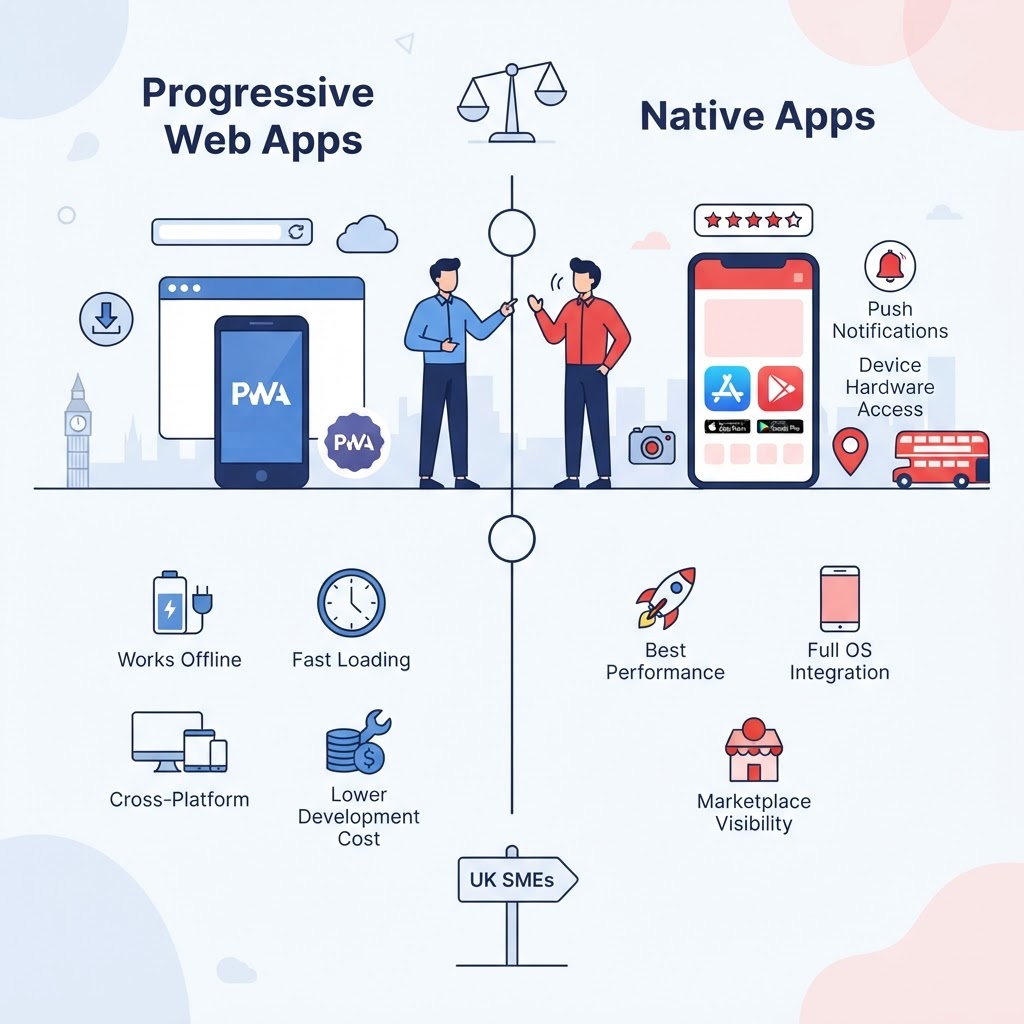
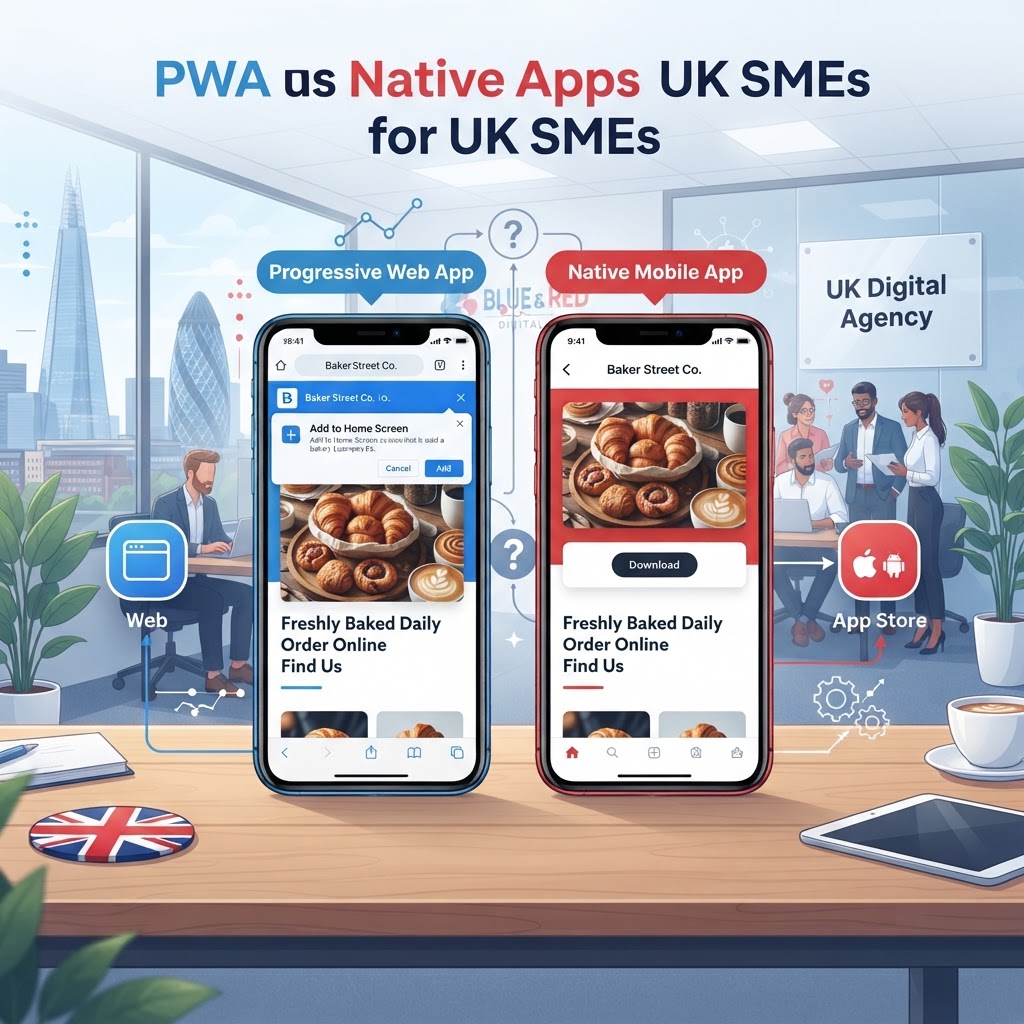
A Progressive Web App (PWA) is a website built with modern web technologies — HTML, CSS, and JavaScript — that behaves like a mobile app. It runs in a browser but can be added to a user's home screen, work offline, send push notifications, and load at near-native speeds. Users never visit an app store; they simply access your website and, if prompted, save it to their device.
A native app, by contrast, is built specifically for a single platform — either iOS (using Swift or Objective-C) or Android (using Kotlin or Java) — and distributed through the Apple App Store or Google Play Store. Native apps have full access to device hardware and operating system features, delivering the highest possible performance and platform-specific experiences.
Key Differences at a Glance
- Distribution: PWAs are accessed via a URL; native apps require app store downloads.
- Development cost: PWAs are typically built once; native apps require separate builds per platform.
- Performance: Native apps generally outperform PWAs for graphics-intensive or hardware-dependent tasks.
- Discoverability: PWAs are indexed by search engines; native apps rely on app store optimisation.
- Updates: PWAs update automatically server-side; native apps require users to download updates.
- Offline capability: Both support offline use, though native apps typically handle this more robustly.
What Are the Costs Involved for UK SMEs?
Cost is rarely the only consideration, but for UK SMEs operating with finite budgets, it is often the deciding factor. The financial picture is stark.
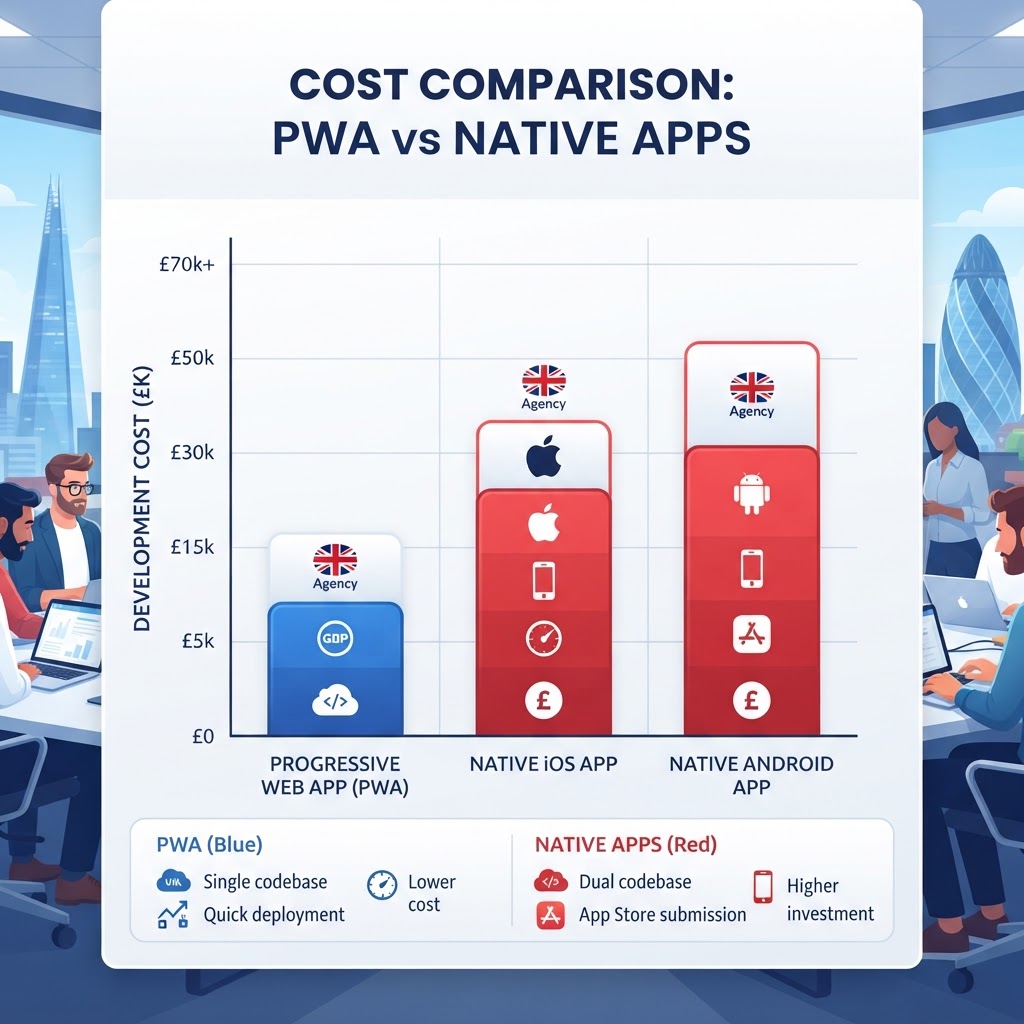
A professionally developed native app for both iOS and Android typically costs between £30,000 and £150,000+ depending on complexity, with ongoing maintenance costs of 15–20% of the original build cost per year. If you want a single cross-platform native experience, frameworks like React Native or Flutter can reduce costs to £15,000–£60,000, but trade-offs exist.
A well-built PWA, by comparison, typically costs between £5,000 and £25,000 for a small to mid-sized business, with significantly lower ongoing maintenance overheads. For many Yorkshire businesses, that cost difference is transformative — representing the difference between a digital product being viable or not.
"PWAs deliver 36% higher conversion rates compared to native apps in several retail benchmarks, and reduce development costs by up to 3–4x. For SMEs with limited budgets, they represent extraordinary value." — Google Developers, Web.dev Case Studies
When Should a UK SME Choose a Progressive Web App?
The honest answer is: most UK SMEs should start with a PWA. Here's why.
PWAs excel when your primary goals are reaching a broad audience quickly, keeping costs manageable, and ensuring your digital presence is SEO-friendly. Because a PWA is essentially a website, every page is indexable by Google. This means your investment in local SEO and content marketing directly supports your app's discoverability — a critical advantage for businesses in competitive local markets like Halifax, Leeds, Bradford, or Sheffield.
PWAs Are the Right Choice If:
- Your primary users are on mobile browsers rather than dedicated app users.
- You need to launch quickly with a limited development budget.
- SEO and organic search traffic are important to your growth strategy.
- Your app functionality doesn't rely heavily on device hardware (camera, GPS beyond basic, Bluetooth, etc.).
- You want one codebase to maintain rather than two separate native builds.
- Your audience includes users who are unlikely to download a dedicated app.
Research consistently shows that app store friction is a genuine barrier to adoption. A significant proportion of users abandon the journey when asked to visit an app store, register, and download before they've experienced any value. A PWA removes that barrier entirely.
When Does a Native App Make More Sense?
Native apps are not obsolete — far from it. There are specific use cases where investing in a native build is clearly justified, and STEPS Solutions will always recommend the right tool for the job rather than a one-size-fits-all answer.
Choose a Native App If:
- Your app requires deep integration with device hardware — for example, augmented reality, advanced camera processing, or Bluetooth connectivity.
- You're building a gaming application or highly graphically intensive experience.
- Your users are highly engaged, loyal customers who will reliably download and update an app — for example, a subscription service or frequent-use utility.
- You operate in a sector where app store presence builds credibility, such as fintech or health technology.
- Your product genuinely requires features that PWAs cannot yet fully support on iOS, such as certain background sync or advanced notification capabilities.
It's also worth noting that Apple's Safari browser has historically lagged behind Chrome in PWA support. While this gap has narrowed significantly since iOS 16, businesses with a predominantly iPhone-using audience should test PWA functionality carefully before committing fully.
SEO, Visibility, and the Digital Marketing Advantage
For UK businesses investing in digital marketing, the SEO implications of your app choice are substantial and often underestimated.
Native apps live inside closed app store ecosystems. Their content is not indexed by Google in the same way web content is. If a customer in Halifax searches for "plumber near me" or "Yorkshire accountant," a native app will not appear in those results — but a PWA built on solid local SEO principles absolutely can.
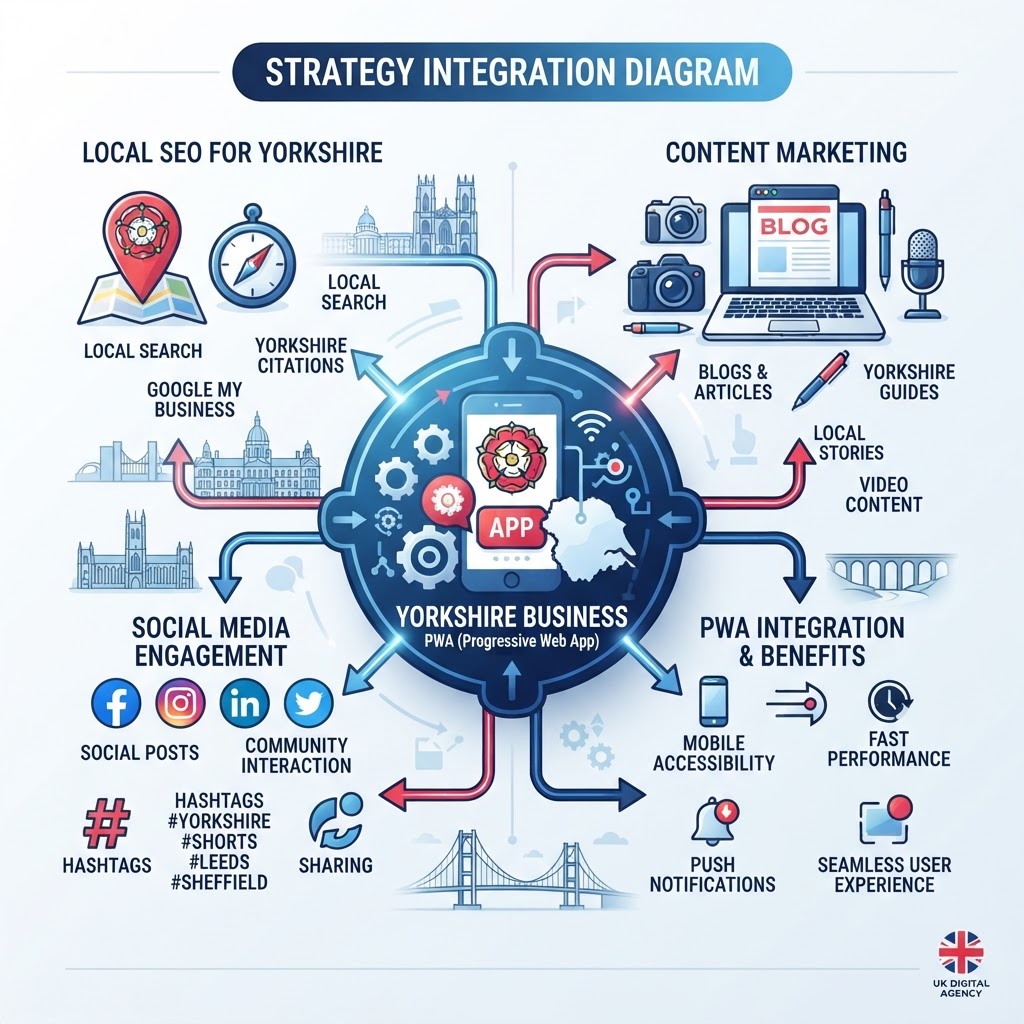
At STEPS Solutions, our approach integrates app development with broader digital marketing strategy. A PWA means your app investment compounds your SEO investment. Every landing page, every service description, every blog post within your PWA is crawlable, rankable, and shareable. That is a powerful return on investment that native apps simply cannot match at this stage.
Furthermore, Core Web Vitals — Google's page experience signals — apply directly to PWAs. A fast, responsive, well-structured PWA can improve your search rankings directly, something a native app in the App Store cannot do.
Key Takeaways
- PWAs are the most cost-effective starting point for most UK SMEs, offering broad reach at a fraction of native app development costs.
- Native apps deliver superior performance for hardware-intensive, graphics-heavy, or deeply platform-integrated use cases.
- PWAs support SEO directly — every page is indexable, making them a natural extension of your digital marketing strategy.
- App store friction is a real barrier; PWAs eliminate it by letting users engage immediately via a browser.
- For most Yorkshire SMEs and UK businesses, a PWA is the right first step — with a native app potentially added later as the audience and budget scale.
- The best choice depends on your audience, budget, functionality requirements, and marketing strategy — not on trends.
- STEPS Solutions provides expert guidance to help Halifax and Yorkshire businesses make the right decision for their specific goals.
Frequently Asked Questions
What is the difference between a Progressive Web App and a native app?
A Progressive Web App (PWA) is a website built with web technologies that functions like a mobile app — it can be saved to a home screen, work offline, and send push notifications — without requiring an app store download. A native app is built specifically for iOS or Android and distributed through the Apple App Store or Google Play Store, offering deeper device integration and typically higher performance for complex tasks.
Are Progressive Web Apps good for SEO?
Yes. PWAs are built on web technologies, meaning their content is fully indexable by Google and other search engines. This makes them an excellent choice for businesses investing in SEO and local SEO, as every page within the PWA can appear in search results. Native apps, by contrast, exist within closed app store ecosystems and their content cannot be indexed by search engines in the same way.
How much does it cost to build a PWA compared to a native app in the UK?
In the UK, a professionally built PWA typically costs between £5,000 and £25,000 for an SME, while a native app for both iOS and Android can cost between £30,000 and £150,000 or more. Cross-platform native frameworks like React Native or Flutter can reduce native costs to £15,000–£60,000, but PWAs remain significantly more affordable and cost-efficient for most small and medium-sized businesses.
Should a small UK business build a PWA or a native app?
For most UK SMEs, a PWA is the recommended starting point. It offers lower development and maintenance costs, built-in SEO benefits, broader reach without app store friction, and a faster route to market. A native app becomes the better choice when your use case requires deep hardware integration, high-performance graphics, or you have a highly engaged user base that will reliably download and use a dedicated app.
Do Progressive Web Apps work on iPhones?
Yes, PWAs work on iPhones via the Safari browser. Apple has progressively improved PWA support, particularly since iOS 16, bringing it closer to the capabilities available on Android via Chrome. However, some advanced PWA features — such as certain background sync behaviours and notification capabilities — are still more limited on iOS than Android. Businesses with a predominantly iPhone audience should thoroughly test their PWA on Safari before launch.